License No: 237321

Frequently asked Questions

Nepal Permits FAQs and Answers

Q: Are you Nepal Based Travel Agency? Do you arrange Local Tour Guide and trekking in high mountain?

A: Yes, of course. We are based in all over Nepal and we arrange tour guides and experienced drivers as well as..

How do I get visa  to Nepal?

GETTING A VISA

Visa can be obtained on arrival at the Tribhuvan International Airport, Kathmandu, at Nepal-India border entry points in Kakiadvitta, Birgunj, Bhairahawa ,Nepalgunj, Gaddachowki, and Kodari on Nepal-China border. Visa can also be obtained at the nearest Embassy or Diplomatic Mission. Visa can also be obtained (renewal purposes) at Department of Immigration, Kathmandu.

Requirement: A valid passport and two passport-size photos with a light background.

Visa can be obtained only through payment of cash in the following currencies: Euro, Swiss Franc, Pound Sterling, US Dollar, Australian Dollar, Canadian Dollar, Hong Kong Dollar, Singapore Dollar and Japanese Yen. Credit card, Indian currency and Nepali currency are not accepted as payment of visa fee.

Gratis (Free) Visa is offered for first visit in one year (January to December), for 30 days, only for nationals of South Asian countries like Bangladesh, Bhutan, Maldives, Pakistan and Sri Lanka. However, visa can be extended from the Immigration Department on payment of visa fee as specified below.

Visa Extension:

Tourists can stay for a maximum of 150 days in a visa year (Jan 1 to Dec31)/

Note: Visa fee is subject to change

When is the best time to go to Nepal?

The weather is probably the best guide for deciding when to plan your trip to Nepal. October and November are considered the best times of the year. The monsoon will have just ended, and clear skies with optimal temperature will prevail.

Seasons

Nepal has four climatic seasons.

The average temperature in Kathmandu during the four seasons:

  • Spring (between March – May): 16-23 Degree Celsius
  • Summer (between June – August): 23-25 Degree Celsius
  • Autumn (between September – November):15-24 Degree Celsius
  • Winter (between December – February): 9-12 Degree Celsius

Temperature & Rainfall

Nepal is the country of extremes. The low-land plains of the Terai can have tropical temperatures and also the mosquitoes. The Himalayas can get to sub-zero temperatures, but the sun blaze can bring some warmth during the day, even in the mountains. The temperature of Kathmandu goes below 1 Degree Celsius (34 Degree Fahrenheit) in winter and rises to an average of 25 Degree Celsius (77 Degree Fahrenheit) in summer.

During the rainy monsoon season between June to August, it rains to an average between 200-375 millimeters in Kathmandu. There is occasional rainfall during the other seasons too. In an average, 1300 millimeters of rain falls in Kathmandu every year.

Travel Tips:

Monsoon in Nepal is not the typical monsoon of Asia. Rains usually occur during the night-time leaving the sky clean and clear by the morning making the Himalayan view even more dramatic. Some parts of the Himalayas in Manang, Mustang and Dolpo are in rain-shadow areas; the mountains are high enough to block the clouds. Tibet’s high travel season also corresponds to Nepal’s monsoon.

How safe is Nepal?

Nepal is one of the safest places in the world. Violent crimes are very rare, and the only real concern to a traveler is petty theft. However, if you take basic common sense precaution, there is nothing to fear. Don’t bring valuable things with you unless necessary for your trip. Keep your money and other valuables in a money belt or pouch strapped around your waist. Lock your bags and luggage.

I am going to be traveling alone? Is there any reason to be concerned?

Not really. You will be fine in most well trafficked area. But if you will be trekking particularly in remote areas and during times of the year when there are fewer travelers (June-September), it is generally advisable to team up even though cases of trouble are few. Teaming up not only deters potential trouble-makers, of which there are not many, but also will be of help in case of any other emergency. You can easily find welcoming fellow tourists along popular trekking routes or in Kathmandu and Pokhara.

How about street beggars and touts?

As in any poor country with enough “rich” foreigners, Nepal has its share of street beggars and middle-men touts trying to sell you everything from information to drugs. There is no need to be intimidated by them. If you are not interested, mind your own business or tell them to leave you alone. They will..

Q: If I take urgent booking from your company (eg.7-11 days in advance), are you able to deal the permits and air tickets?

A: Yes we can. But you have to pay 30% advance for the conformation trip. And also if you cancel then that 30% advance is not refundable.

Q: How can I make a trekking itinerary?

A: You can choose the pre-made trekking itinerary from our website and send your requirement to us. We will have our trek adviser help you with the further discussion. You can also pop up your own itinerary but have to consult our adviser to see if your proposition is feasible and doable.

Q: What methods of payment do you accept?

A: We accept major ways of payment:

          Cash

  • PayPal
  • Bank transfer
  • For Germany: you can pay direct to our agent who is in Germany.

Q: Does the hotel room have access to internet?

A: yes, there is free internet. And also you can use free wifi and computer printer in our office

Q: Can I design my own private Nepal tour or trek itinerary by myself?

A: yes.

Q: If we feel quite bad due to the Mountain Sickness, shall I be allowed to change the itinerary? 

A: Well we do give our clients understanding about their health issue, if they meet heave altitude issue when in nepal, we can talk with you for a plan B, if the trip is almost finished, there is no refund, or if your trip is just at the beginning, we will refund you some money such as the entrance tickets, and the hotel and car rental cancellation charge. We do not charge you outrageously as other agents did but they got bad reputation. If you are a wise traveller, you can easily check out which is good one and which is not.

Q: If my flights delayed or were cancelled urgently, lets say one day in advance, will you be able to help us adjust the tour itinerary accordingly?

A: Yes, we have to. We are able to a just the tour program very well if there are some urgent schedule changes because of flights. But there is no refund, on the other hand if there is some loss resulted from flight, the airline company will have to offer some compensations accordingly, for egample, provide you accommodation, arrange you to flights suitable.

MOUNTAINEERING IN NEPAL

With 8 highest peaks and many 8000 m and 7000 m peaks Nepal is considered the best destination for mountaineering in the world.

Mountaineering in Nepal is not only challenging but also very rewarding. Part of the Himalayas, the highest mountain range in the world lies in Nepal. Eight of the fourteen eight-thousander are located in the country, either in whole or shared across a border with China or India. Nepal has the highest mountain in the world, Mount Everest. The ultimate glory of mountaineering is reaching the summit of Mt. Everest, but there are other technical challenges like Lhose beside it or you can take on any of the other 326 climbing peaks that are waiting for you.

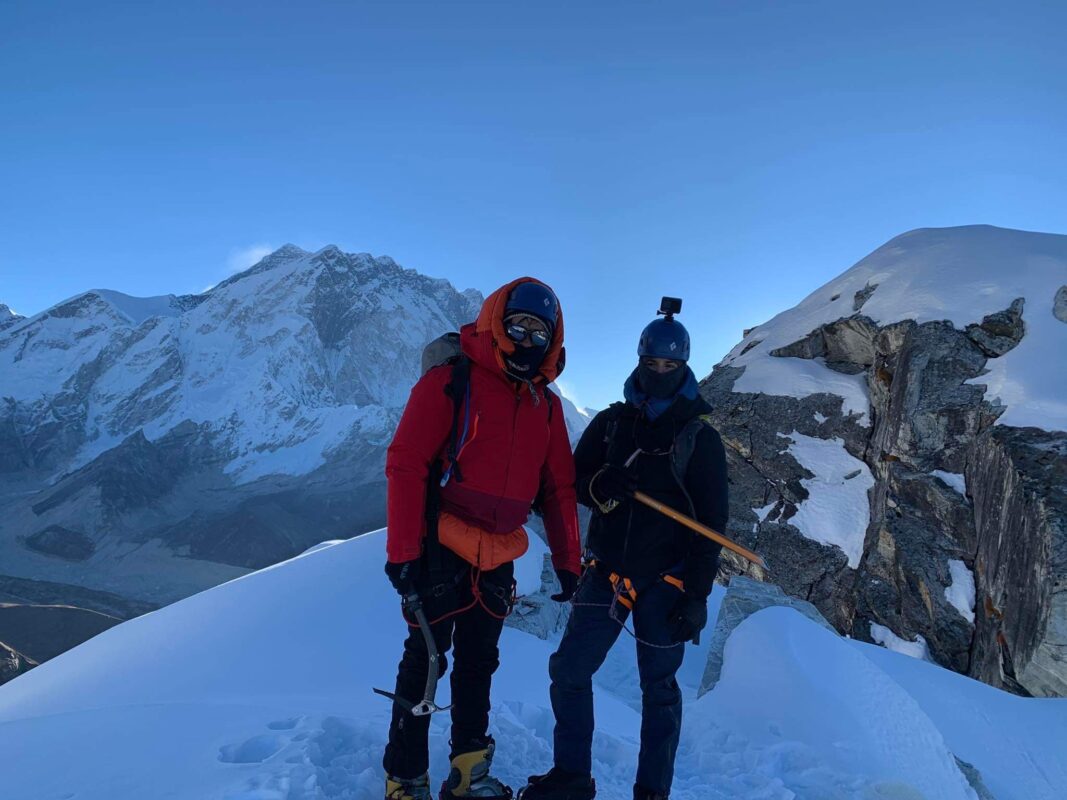
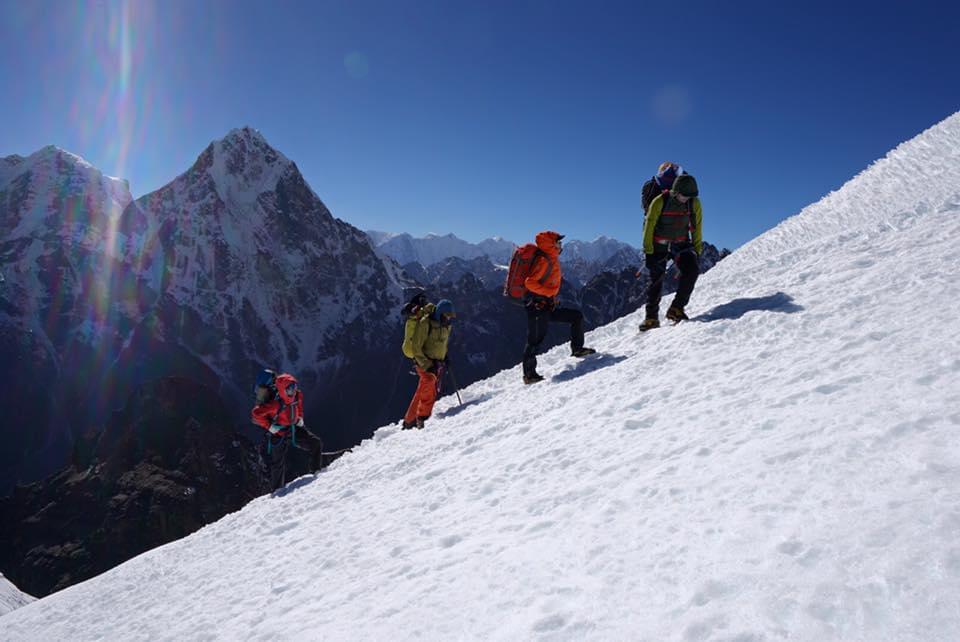
Island Peak trekadviser.com
Mountaineering in Nepal

The most formidable mountain range in the world with nearly a third of the country lying above the elevation of 3,500 m. Eight of the world’s highest peaks lie within Nepal’s territory:

  • Everest 8848 m
  • Kanchenjunga 8586 m
  • Lhotse 8516 m
  • Makalu 8463 m
  • Cho Oyu 8201 m
  • Dhaulagiri 8167 m
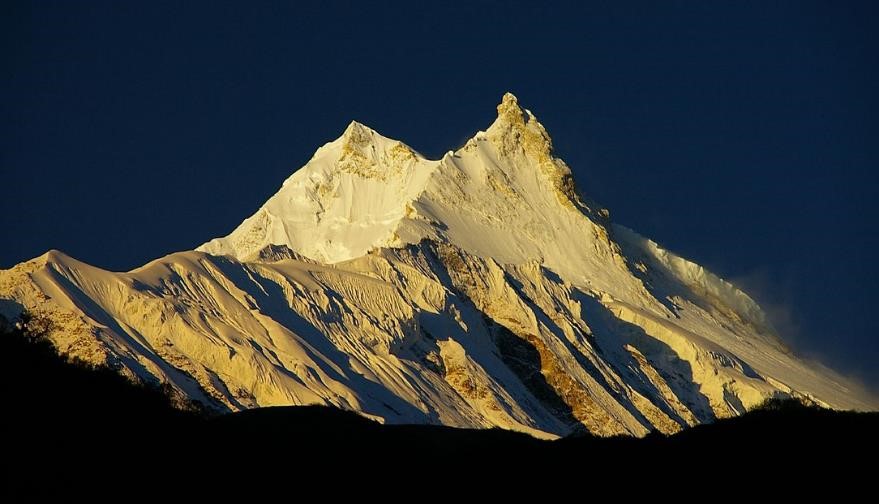
  • Manaslu 8156 m
  • Annapurna I 8091 m

which are all over 8,000 m above sea level. Everest was first sumitted by Edmund Hillary and Tenzing Norgay in 1953 with a Bristish Expedition led by John Hunt. While the first mountain to be climbed among them was Annapurna in 1950 by a French Expedition with Maurice Herzog as leader.

Besides these eight giant peaks, there are 326 other mountains within Nepal which are open for mountaineering expeditions and out of them, 103 have never been climbed before. Nepal offers mountaineers more opportunities than any other country in the world, and throws endless challenges at them including the less glorified trekking peaks which still require climbing gear and climbing skills if you want to climb them.

Mountain
/Peak
MetresFeetSectionNotes
Mount Everest8,84829,029Khumbu  Earth’s highest from sea level
Kanchenjunga8,58628,169Northern Kanchenjunga  3rd highest on Earth
Lhotse8,51627,940Everest Group  4th highest
Makalu8,46327,766Makalu Mahalangur  5th highest
Cho Oyu8,20126,906Khumbu Mahalangur  6th highest
Dhaulagiri I8,16726,795Dhaulagiri  7th highest
Manaslu8,15626,759Mansiri  8th highest
Annapurna I8,09126,545Annapurna  10th highest
Gyachung Kang7,95226,089Khumbu Mahalangur  between Everest and Cho Oyu
Annapurna II7,93726,040Annapurna  
Himalchuli7,89325,896Mansiri  18th highest
Ngadi Chuli7,87125,823Mansiri  First ascent 1970
Nuptse7,86125,791Everest Group  319 metres prominence from Lhotse
Dhaulagiri II7,75125,430Dhaulagiri   
Jannu7,71125,299Kumbhakarna Kangchenjunga  
Dhaulagiri IV7,66125,135Dhaulagiri   
Dhaulagiri V7,61824,993Dhaulagiri   
Annapurna III7,55524,787Annapurna  
Jongsong Peak7,46224,482Janak  #57 in the world
Gangapurna7,45524,459Annapurna  
Yangra7,42224,350Ganesh  
Kabru7,41224,318Singalila Kangchenjunga  
Churen Himal7,38524,229Dhaulagiri   
Kirat Chuli7,36524,163Kangchenjunga  
Nangpai Gosum7,35024,114Khumbu Mahalangur  First ascent October 12, 1986
Gimmigela Chuli7,35024,114   First ascent 1995
Chamlang7,32124,019Barun Mahalangur  #79 in the world
Dhaulagiri VI7,26823,845Dhaulagiri   
Putha Hiunchuli7,24623,773Dhaulagiri   
Langtang Lirung7,22723,711Langtang  #99 in the world
Annapurna Dakshin7,21923,684Annapurna  
Langtang Ri7,20523,638Langtang  #106 in the world
Chamar7,18723,579Sringi  First ascent 1953
Melungtse7,18123,560Rolwaling  First ascent 1988
Pumori7,16123,494Khumbu Mahalangur  First ascent 1962
Nemjung Manang7,14023,425   First ascent 1983
Gaurishankar7,13423,406Rolwaling  First ascent 1979
Tilicho Peak7,13423,406Annapurna  First ascent 1979
Api7,13223,399Yoka Pahar Gurans  First ascent 1960
Baruntse7,12923,389Barun Mahalangur  First ascent 1954
Nilgiri7,06123,166Nilgiri Annapurna  First ascent 1962
Saipal7,03123,068Saipal Gurans  
Machapuchare6,99322,943Annapurna  Sacred mountain, unclimbed
Kang Guru6,98122,904Larkya or Peri  2005 avalanche kills 18
Dorje Lakpa6,96622,854Langtang  
Kanjiroba6,88322,582Kanjiroba Himal  
Kubi Gangri6,85922,503Himalayas  
Jethi Bahurani6,85022,474Himalayas  
Ama Dablam6,81222,349Barun Mahalangur  “Mother and her necklace”
Kangtega6,78222,251Barun Mahalangur  First ascent 1963
Cho Polu6,73522,096Barun Mahalangur  First ascent 1999
Changla6,72122,051Himalayas  
Lingtren6,71422,028Khumbu Mahalangur  First ascent 1935
Num Ri6,67721,906Barun Mahalangur  First ascent 2002
Khumbutse6,64021,785Khumbu Mahalangur  First mountain west of Everest
Thamserku6,62321,729Barun Mahalangur  First ascent 1964
Pangboche6,62021,719Kutang Himal  
Dragmarpo Ri6,57821,581Langtang  Unclimbed
Taboche6,54221,463Khumbu Mahalangur  First ascent 1974
Singu Chuli6,50121,329Annapurna  Trekking peak
Mera Peak6,47621,247Himalayas  Trekking peak
Hiunchuli6,44121,132Annapurna  Trekking peak (difficult)
Cholatse6,44021,129Khumbu Mahalangur  Connected to Taboche
Kusum Kangguru6,36720,889Barun Mahalangur  Trekking peak (difficult)
Ombigaichan6,34020,801Barun Mahalangur  
Om Parvat6,19120,312Himalayas  Sacred summit
Kongde Ri6,18720,299Barun Mahalangur  Trekking peak (difficult)
Imja Tse6,16020,210Khumbu Mahalangur  Also known as Island Peak. Popular trekking peak.
Lobuche6,14520,161Khumbu Mahalangur  Trekking peak
Pisang Peak6,09119,984Annapurna  Trekking peak
Nirekha6,06919,911Khumbu Mahalangur  Trekking peak (difficult)
Baden-Powell Peak5,82519,111Jugal  Formerly known as Urkema Peak
Pokalde5,80619,049Khumbu Mahalangur  Trekking peak (moderate)
Mount Khumbila5,76118,901Mahalangur  Unclimbed
Tharpu Chuli5,66318,579Annapurna  Trekking peak
Kala Patthar5,54518,192Khumbu Mah  Popular hiking peak below Pumori
Yala Peak5,52018,110Langtang  
Gokyo Ri5,35717,575Khumbu  Popular hiking peak
Mountains of Nepal
 

Nepal’s climbing history goes back a long way starting with the early explorers from British India who were lured by lofty peaks and the challenges of climbing virgin peaks where no human had set foot before. By the 1960s Nepal’s trekking and mountaineering industry was well establishhed with private companies providing all logistics including porters and guides for a full expedition that would spend months in the mountains.

Since ancient times, people have viewed mountain peaks as towering objects of myth, spiritual inspiration, and romantic beauty. Early people made ascents only to hunt game, to rescue lost or strayed animals, or to gain a military advantage over an enemy. Eventually, the unknown and inaccessible ceased to be something to be feared and avoided, and the conquest of the major mountain peaks and ranges of the world began. Mountaineering as a sport was born on 8th Aug 1786, with the first ascent of Mont Du Blanc (4807 m / 15,771 ft), one of Europe ‘s tallest peaks. Since that ascent, mountain climbing has evolved into three related sports: alpine climbing, ice climbing, and rock climbing. These sports require the same fundamental techniques.

Today there are many companies that will take care of every aspect of mountain climbing and all the mountaineer has to do is arrive in good shape physically and mentally, prepared to take on the challenge and not worry about equipment and supplies. Most of the Everest expeditions are handled by well-known and trusted private companies.

The reputation of the Sherpas is built on mountaineering with many of these mountain people achieving glorified status with their multiplt climbs of Everest and other 8000 m peaks. Most expeditions wouldn’t go up without the loyal, hardy and extremely reliable sherpas. They risk theiir lives for their clients and are often called upon to rescue a climber in trouble. Although today there are many other ethnic groups involved in the service, they are generally referred to as Sherpas.

Despite all the attention being grabbed by mountains like Everest and Annapurna, the latter more for trekking than climbing, there are other peaks being climbed on a regular basis but don’t make headline news. Lhotse, Ama Dablam and Manaslu are also climbed often besides trekking peaks like Mera, Island and Yala peaks which are quite popular. Ther are also climbers looking to climb virgin peaks as Nepal from time to time, opens up new, unheard of peaks for climbing and who wouldn’t want to be the first to climb!

Nepal has designated the Annapurna, Manaslu and Kanchenjunga regions as Conservation Areas while Sagarmatha (Everest), Langtang and Shey-Phoksundo (Dolpo) are national parks while other mountain areas might not fall into these categories but are designated as ‘Restricted Areas’ as they are close to Nepal’s northern border. While the infrastructure of, and accessibility to Sagarmatha, Annapurna, Manaslu and Langtang are well developed and easily accessible enabling mountaineers and expeditions to make quick progress to their base camps the remaining areas, including the restricted areas are still very remote, where rescue or help from external sources will be difficult or unlikely and access to these areas is complex and at times difficult. Expeditions into those areas require a completely different approach, level of commitment and organizational ability to succeed on their chosen summit.

We are associated and certified with

Government of Nepal

Registered with: Company Registration Office, Government of Nepal

Nepal tourism board

Licensed by: Nepal Tourism Board & Department of Tourism

Nepal Mountaineering Association

General Member of Nepal Mountaineering Association

Trekking Agency's Association of Nepal (TAAN)

Proud Member of Trekking Agency's Association of Nepal