
License No: 237321

MOUNTAINEERING IN NEPAL

With 8 highest peaks and many 8000 m and 7000 m peaks Nepal is considered the best destination for mountaineering in the world.

Mountaineering in Nepal is not only challenging but also very rewarding. Part of the Himalayas, the highest mountain range in the world lies in Nepal. Eight of the fourteen eight-thousander are located in the country, either in whole or shared across a border with China or India. Nepal has the highest mountain in the world, Mount Everest. The ultimate glory of mountaineering is reaching the summit of Mt. Everest, but there are other technical challenges like Lhose beside it or you can take on any of the other 326 climbing peaks that are waiting for you.
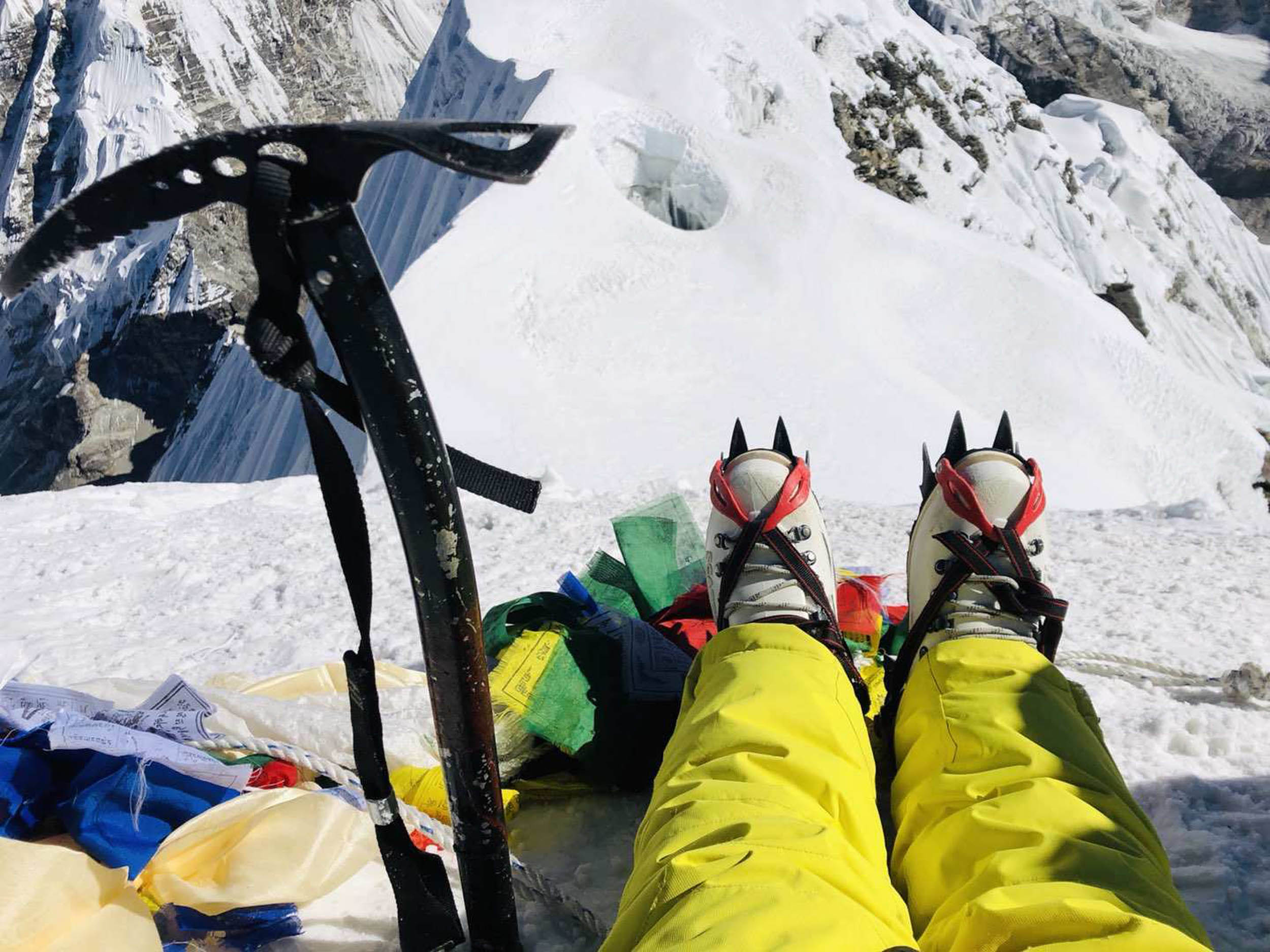
Island Peak trekadviser.com
Mountaineering in Nepal

The most formidable mountain range in the world with nearly a third of the country lying above the elevation of 3,500 m. Eight of the world’s highest peaks lie within Nepal’s territory:

  • Everest 8848 m
  • Kanchenjunga 8586 m
  • Lhotse 8516 m
  • Makalu 8463 m
  • Cho Oyu 8201 m
  • Dhaulagiri 8167 m
  • Manaslu 8156 m
  • Annapurna I 8091 m

which are all over 8,000 m above sea level. Everest was first sumitted by Edmund Hillary and Tenzing Norgay in 1953 with a Bristish Expedition led by John Hunt. While the first mountain to be climbed among them was Annapurna in 1950 by a French Expedition with Maurice Herzog as leader.

Besides these eight giant peaks, there are 326 other mountains within Nepal which are open for mountaineering expeditions and out of them, 103 have never been climbed before. Nepal offers mountaineers more opportunities than any other country in the world, and throws endless challenges at them including the less glorified trekking peaks which still require climbing gear and climbing skills if you want to climb them.

Mountain
/Peak
MetresFeetSectionNotes
Mount Everest8,84829,029Khumbu  Earth’s highest from sea level
Kanchenjunga8,58628,169Northern Kanchenjunga  3rd highest on Earth
Lhotse8,51627,940Everest Group  4th highest
Makalu8,46327,766Makalu Mahalangur  5th highest
Cho Oyu8,20126,906Khumbu Mahalangur  6th highest
Dhaulagiri I8,16726,795Dhaulagiri  7th highest
Manaslu8,15626,759Mansiri  8th highest
Annapurna I8,09126,545Annapurna  10th highest
Gyachung Kang7,95226,089Khumbu Mahalangur  between Everest and Cho Oyu
Annapurna II7,93726,040Annapurna  
Himalchuli7,89325,896Mansiri  18th highest
Ngadi Chuli7,87125,823Mansiri  First ascent 1970
Nuptse7,86125,791Everest Group  319 metres prominence from Lhotse
Dhaulagiri II7,75125,430Dhaulagiri   
Jannu7,71125,299Kumbhakarna Kangchenjunga  
Dhaulagiri IV7,66125,135Dhaulagiri   
Dhaulagiri V7,61824,993Dhaulagiri   
Annapurna III7,55524,787Annapurna  
Jongsong Peak7,46224,482Janak  #57 in the world
Gangapurna7,45524,459Annapurna  
Yangra7,42224,350Ganesh  
Kabru7,41224,318Singalila Kangchenjunga  
Churen Himal7,38524,229Dhaulagiri   
Kirat Chuli7,36524,163Kangchenjunga  
Nangpai Gosum7,35024,114Khumbu Mahalangur  First ascent October 12, 1986
Gimmigela Chuli7,35024,114   First ascent 1995
Chamlang7,32124,019Barun Mahalangur  #79 in the world
Dhaulagiri VI7,26823,845Dhaulagiri   
Putha Hiunchuli7,24623,773Dhaulagiri   
Langtang Lirung7,22723,711Langtang  #99 in the world
Annapurna Dakshin7,21923,684Annapurna  
Langtang Ri7,20523,638Langtang  #106 in the world
Chamar7,18723,579Sringi  First ascent 1953
Melungtse7,18123,560Rolwaling  First ascent 1988
Pumori7,16123,494Khumbu Mahalangur  First ascent 1962
Nemjung Manang7,14023,425   First ascent 1983
Gaurishankar7,13423,406Rolwaling  First ascent 1979
Tilicho Peak7,13423,406Annapurna  First ascent 1979
Api7,13223,399Yoka Pahar Gurans  First ascent 1960
Baruntse7,12923,389Barun Mahalangur  First ascent 1954
Nilgiri7,06123,166Nilgiri Annapurna  First ascent 1962
Saipal7,03123,068Saipal Gurans  
Machapuchare6,99322,943Annapurna  Sacred mountain, unclimbed
Kang Guru6,98122,904Larkya or Peri  2005 avalanche kills 18
Dorje Lakpa6,96622,854Langtang  
Kanjiroba6,88322,582Kanjiroba Himal  
Kubi Gangri6,85922,503Himalayas  
Jethi Bahurani6,85022,474Himalayas  
Ama Dablam6,81222,349Barun Mahalangur  “Mother and her necklace”
Kangtega6,78222,251Barun Mahalangur  First ascent 1963
Cho Polu6,73522,096Barun Mahalangur  First ascent 1999
Changla6,72122,051Himalayas  
Lingtren6,71422,028Khumbu Mahalangur  First ascent 1935
Num Ri6,67721,906Barun Mahalangur  First ascent 2002
Khumbutse6,64021,785Khumbu Mahalangur  First mountain west of Everest
Thamserku6,62321,729Barun Mahalangur  First ascent 1964
Pangboche6,62021,719Kutang Himal  
Dragmarpo Ri6,57821,581Langtang  Unclimbed
Taboche6,54221,463Khumbu Mahalangur  First ascent 1974
Singu Chuli6,50121,329Annapurna  Trekking peak
Mera Peak6,47621,247Himalayas  Trekking peak
Hiunchuli6,44121,132Annapurna  Trekking peak (difficult)
Cholatse6,44021,129Khumbu Mahalangur  Connected to Taboche
Kusum Kangguru6,36720,889Barun Mahalangur  Trekking peak (difficult)
Ombigaichan6,34020,801Barun Mahalangur  
Om Parvat6,19120,312Himalayas  Sacred summit
Kongde Ri6,18720,299Barun Mahalangur  Trekking peak (difficult)
Imja Tse6,16020,210Khumbu Mahalangur  Also known as Island Peak. Popular trekking peak.
Lobuche6,14520,161Khumbu Mahalangur  Trekking peak
Pisang Peak6,09119,984Annapurna  Trekking peak
Nirekha6,06919,911Khumbu Mahalangur  Trekking peak (difficult)
Baden-Powell Peak5,82519,111Jugal  Formerly known as Urkema Peak
Pokalde5,80619,049Khumbu Mahalangur  Trekking peak (moderate)
Mount Khumbila5,76118,901Mahalangur  Unclimbed
Tharpu Chuli5,66318,579Annapurna  Trekking peak
Kala Patthar5,54518,192Khumbu Mah  Popular hiking peak below Pumori
Yala Peak5,52018,110Langtang  
Gokyo Ri5,35717,575Khumbu  Popular hiking peak
Mountains of Nepal
 

Nepal’s climbing history goes back a long way starting with the early explorers from British India who were lured by lofty peaks and the challenges of climbing virgin peaks where no human had set foot before. By the 1960s Nepal’s trekking and mountaineering industry was well establishhed with private companies providing all logistics including porters and guides for a full expedition that would spend months in the mountains.

Since ancient times, people have viewed mountain peaks as towering objects of myth, spiritual inspiration, and romantic beauty. Early people made ascents only to hunt game, to rescue lost or strayed animals, or to gain a military advantage over an enemy. Eventually, the unknown and inaccessible ceased to be something to be feared and avoided, and the conquest of the major mountain peaks and ranges of the world began. Mountaineering as a sport was born on 8th Aug 1786, with the first ascent of Mont Du Blanc (4807 m / 15,771 ft), one of Europe ‘s tallest peaks. Since that ascent, mountain climbing has evolved into three related sports: alpine climbing, ice climbing, and rock climbing. These sports require the same fundamental techniques.

Today there are many companies that will take care of every aspect of mountain climbing and all the mountaineer has to do is arrive in good shape physically and mentally, prepared to take on the challenge and not worry about equipment and supplies. Most of the Everest expeditions are handled by well-known and trusted private companies.

The reputation of the Sherpas is built on mountaineering with many of these mountain people achieving glorified status with their multiplt climbs of Everest and other 8000 m peaks. Most expeditions wouldn’t go up without the loyal, hardy and extremely reliable sherpas. They risk theiir lives for their clients and are often called upon to rescue a climber in trouble. Although today there are many other ethnic groups involved in the service, they are generally referred to as Sherpas.

Despite all the attention being grabbed by mountains like Everest and Annapurna, the latter more for trekking than climbing, there are other peaks being climbed on a regular basis but don’t make headline news. Lhotse, Ama Dablam and Manaslu are also climbed often besides trekking peaks like Mera, Island and Yala peaks which are quite popular. Ther are also climbers looking to climb virgin peaks as Nepal from time to time, opens up new, unheard of peaks for climbing and who wouldn’t want to be the first to climb!

Nepal has designated the Annapurna, Manaslu and Kanchenjunga regions as Conservation Areas while Sagarmatha (Everest), Langtang and Shey-Phoksundo (Dolpo) are national parks while other mountain areas might not fall into these categories but are designated as ‘Restricted Areas’ as they are close to Nepal’s northern border. While the infrastructure of, and accessibility to Sagarmatha, Annapurna, Manaslu and Langtang are well developed and easily accessible enabling mountaineers and expeditions to make quick progress to their base camps the remaining areas, including the restricted areas are still very remote, where rescue or help from external sources will be difficult or unlikely and access to these areas is complex and at times difficult. Expeditions into those areas require a completely different approach, level of commitment and organizational ability to succeed on their chosen summit.

What is Corona virus or COVID 19?

What is Corona virus or COVID 19?

At this point, you most likely have heard of a 2019 COVID 19 or Corona infection that is responsible for a worldwide pandemic. Corona virus or Covid 19 infection is responsible for a worldwide pandemic. Started in Wuhan province in China this virus has now spread all over the world. The World Health Organization has named it to COVID-19 because it does not refer to a geographic location, animal, person, or group of people, all of which lead to stigma.

Corona viruses (CoV) are a large family of viruses that cause illness ranging from the common cold to more severe diseases such as Middle East Respiratory Syndrome (MERS-CoV) and Severe Acute Respiratory Syndrome (SARS-CoV)A novel coronavirus (nCoV) is a new strain that has not been previously identified in humans. Coronaviruses are zoonotic, meaning they are transmitted between animals and people. Detailed investigations found that SARS-CoV was transmitted from civet cats to humans and MERS-CoV from dromedary camels to humans. Several known coronaviruses are circulating in animals that have not yet infected humans.

Since this infection is so new, very little is known about it. General Health Groups and Prevention (CDC), the World Health Organization (WHO) and the United States Centers for Disease Control are investigating on this Virus. You can check their websites for updates.


How does Corona virus COVID-19 spread?

Humans can intercept COVID-19 from other people with the virus. The disease can spread from person to person through small droplets from the nose or mouth that spread when a person with COVID-19 coughs or exhales. These droplets land on objects and surfaces around the person. Other people then catch COVID-19 by touching these objects or surfaces and then touching their eyes, nose or mouth. Humans can also catch COVID-19 by inhaling droplets from someone with COVID-19 who coughs or exhales droplets. For this reason, it is important to be more than 1 meter away from a sick person. WHO is currently reviewing research into the spread of COVID-19 and will continue to publish update results.


Can the virus that causes COVID-19 be transmitted by air?

Previous studies suggest that the virus that causes COVID-19 is primarily transmitted through contact with droplets of breath and not through the air. See previous answer to “How does COVID-19 spread?”


Can CoVID-19 be caught by a person who has no symptoms?

The disease spreads mainly through droplets of breath that are expelled by someone who coughs. The risk of getting COVID-19 from someone without symptoms is very low. However, many people with COVID-19 experience only mild symptoms. This is especially true in the early stages of the disease. It is therefore possible to get COVID-19 from someone who, for example, has only a mild cough and does not feel sick. WHO is currently evaluating ongoing research on the COVID-19 transmission period and will continue to publish updated results.


Can I catch COVID-19 from the feces of someone with the disease?

The risk of catching COVID-19 from an infected person’s feces appears to be low. While initial research suggests that the virus may be present in the feces in some cases, spreading this way is not a major feature of the outbreak. WHO is currently evaluating research into the spread of COVID-19 and will continue to share new knowledge. However, since this is a risk, it is another reason to clean your hands regularly after using the bathroom and before eating.


Symptoms of COVID-19:
The most common symptoms of COVID-19 are:
• Fever
• Shortness of breath
• Fatigue and
• Dry cough

Many patients may experience pain, inflammation of the nose, runny nose, sore throat, or diarrhea. Typically, these symptoms are mild and start slowly. Many people get sick, but have no symptoms and do not feel uncomfortable. Most people (around 80%) recover from the disease without special treatment. Approximately one in six people who develop COVID-19 become seriously ill and have difficult breathing. Older people and people with underlying diseases such as heart problems or diabetes, high blood pressure are more likely to develop a serious illness.

Approximately 2% of people with the disease are dead. People with cough, fever, and difficulty breathing should make clinical considerations.


How can I protect myself from COVID19?

Protective measures for everyone Find the latest information on the COVID 19 outbreak that is available on the WHO website and from your national and local health authorities. COVID-19 cases have occurred in many countries around the world and outbreaks have occurred in several countries. Authorities in China and some other countries have managed to slow or stop their outbreaks. However, the situation is unpredictable. So check for the latest news regularly.

You can reduce the risk of infection or spread of COVID-19 by taking a few simple precautions:
• Clean your hands regularly and thoroughly with an alcohol-based hand massage or wash them with soap and water.
Why? Washing your hands with soap and water or rubbing them with alcohol will kill viruses that may be on your hands.


• Keep a distance of at least 1 meter between yourself and anyone who coughs or sneezes.
Why? When someone coughs or sneezes, they spray small droplets of liquid from the nose or mouth that may contain viruses. If you are too close, you can inhale the droplets, including the COVID-19 virus, if the person who coughs suffers from the disease.


• Do not touch your eyes, nose and mouth.
Why? Hands touch many surfaces and can absorb viruses. Once contaminated, hands can spread the virus to your eyes, nose, or mouth. From there, the virus can enter your body and make you sick.


• Make sure that you and the people around you keep good breathing hygiene. This means that when you cough or sneeze, cover your mouth and nose with your elbows or tissue bent. Dispose of the used tissue immediately.
Why? Droplets spread the virus. Good respiratory hygiene protects people around you from viruses such as the common cold, flu and COVID-19.

• Stay home if you feel uncomfortable. If you have a fever, cough, and difficulty breathing, see a doctor and call in advance. Follow the instructions from your local health department.
Why? The national and local authorities have the most current information on the situation in your region. If you call in advance, your doctor can quickly direct you to the correct healthcare facility. This also protects you and prevents the spread of viruses and other infections.


• Stay up to date with the latest developments in COVID-19. Follow the instructions given by your healthcare provider, your national and local health authority, or your employer on how to protect yourself and others from COVID-19.
Why? National and local authorities receive the most current information on whether COVID-19 is spreading in your region. They are best able to advise on what people in your area should do to protect themselves.


• Stay up to date on the latest COVID-19 hotspots (cities or areas where COVID-19 is common). If possible, avoid traveling to places – especially if you are an elderly person or have diabetes, heart or lung disease.
Why? You have a higher chance of catching COVID-19 in one of these areas.


Protective measures for people who are in or who have recently visited areas (where COVID- 19 has spread) in the past 14 days

• Follow the instructions above (protective measures for everyone)
• Self-isolate by staying at home when you feel uncomfortable, even with mild symptoms such as headache, mild fever (37.3 ° C or higher) and a slightly runny nose, until you recover. If it is important to you that someone brings you supplies or runs out, e.g. To buy food, wear a mask so as not to infect other people.

Why? By avoiding contact with other people and visits to medical facilities, these facilities can work more effectively and protect you and others from possible COVID-19 and other viruses.
• If you develop a fever, cough, and difficulty breathing, see a doctor straight away, as this may be due to a respiratory infection or other serious condition. Call in advance and inform your provider about recent trips or contact with travelers.
Why? If you call in advance, your doctor can quickly direct you to the correct healthcare facility. This will also help prevent COVID-19 and other viruses from spreading.


State of Corona Virus in Nepal

On January 13, 2020, a 32-year-old male, a Nepalese student at Wuhan University of Technology in Wuhan, China, returned to Nepal and was presented at the outpatient clinic of the Sukraraj Tropical and Infectious Disease Hospital in Kathmandu. He complained of breathing problems and sore throat. He got sick 6 days before arriving in Nepal on January 3. Before he was released, STIDH doctors collected his throat swab and blood sample and sent them to Hong Kong for a test. On January 14, his temperature
rose to 38.9 ° C, and the next day he had supine breathing difficulties with crepitus in the lower right lung field. His fever was gone on January 16 and his clinical condition improved.

The Ministry of Health and Population announced that the first case of coronavirus was discovered in Nepal on January 23. According to a press release by the ministry, a throat swab test and blood sample from a Nepalese citizen have been sent to the WHO Collaborative Center. Hong Kong, prove that the suspect was infected with the virus in China. With the WHO communication, the Nepalese government has set up a health office at TIA to closely monitor the disease.

Similarly, the other three, who have returned from China with symptoms similar to the coronavirus, are observed at the government hospital. As the corona virus spreads, the Nepalese government has announced a number of efforts to prevent its spread in Nepal. Together with the Tribhuwan International Airport, the Rasuwa district administration set up a health center in Rasuwagdhi on the border between Nepal and China to closely monitor people arriving from China. While China is struggling to contain the deadly corona virus in its Hubei province, while hundreds of millions of Chinese are preparing to travel over the lunar new year, WHO has highlighted the potential risk to Nepal.


Is Nepal safe to travel?

The effects of Corona Virus in Nepal are not yet apparent, and the government of Nepal and several health organizations and agencies are focusing on diagnosing corona viruses and their treatment.
Hopefully this could prevent the corona virus from spreading in Nepal. In this sense, Nepal is safe to visit.

However, general health measures discussed above should be taken. Nepal is safe to visit as the private sector and Nepal’s government bodies are working on controlling this outbreak. Visiting Nepal won’t affect your travel experience and, of course, Nepal has no history of coronavirus transmission until the date. You can travel safely to Nepal with due care and precaution.

However, the spread of the virus has been halted and well under global control due to constant treatment by government authorities and rapid medical response around the world. Nepal’s tourism ministry to test and curb the virus ‘ effects, and isolate such cases when identified. At Tribhuvan International Airport as well as in all border points along Nepal and China, a separate health desk was set up, staffed by doctors and health professionals.

The Government of Nepal has temporarily suspended the Visa-on-arrival regime for nationals of five countries – China, South Korea, Japan, Italy and Iran which are badly affected by the Coronavirus (COVID- 19) epidemic. If citizens from these countries wish to travel to Nepal, they will need to obtain a visa at the Nepali embassy in their respective countries.
The nationals of all other countries who were eligible for the Visa-on-arrival will continue to receive them.


Reference:
[1] World Health Organization:
[2] The Kathmandu Post

We are associated and certified with

Government of Nepal

Registered with: Company Registration Office, Government of Nepal

Nepal tourism board

Licensed by: Nepal Tourism Board & Department of Tourism

Nepal Mountaineering Association

General Member of Nepal Mountaineering Association

Trekking Agency's Association of Nepal (TAAN)

Proud Member of Trekking Agency's Association of Nepal