License No: 237321/076/077

Narphu Valley Trek

Narphu Valley Trek

Annapurna Region

Max Elevation

Max Elevation

5240m

Duration

Duration

13 days

Difficulty

Difficulty

Moderate

Download Trip PDF
Enquire Now
Trek Starting Point

Trek Starting Point

Koto

Trek Ending Point

Trek Ending Point

Pisang

Departure From

Departure From

Kathmandu

Transportation

Transportation

Tourist Coach, Private Vehicle, Local Jeep

Style

Style

Hiking and Trekking

Meal

Meal

Breakfast, Lunch, Dinner

Accommodation

Accommodation

Tourist standard hotel in Kathmandu, Teahouse during trek

Overview

The Nar Phu Valley Trek is one of Nepal's most remote and culturally rich Himalayan adventures, taking trekkers into a restricted, far-off corner of the Annapurna region that few visitors ever reach. Tucked between the well-known routes of Mustang and the Annapurna Circuit, this journey offers an incredible blend of dramatic mountain scenery, deep-rooted Tibetan culture, and genuine off-the-beaten-path trekking.

The journey begins with a scenic drive from Kathmandu to Besisahar, followed by a long mountain drive along the Marsyangdi River through Chame and on to Koto, where the trek proper begins. From here, the trail leaves the road behind and enters the narrow, little-visited gorge carved by the Naar Khola. As the route gains elevation, the landscape shifts quickly from pine and fir forest into stark, wind-scoured high desert, with towering cliffs, cascading side-streams, and ancient fortress ruins guarding the valley's approach.

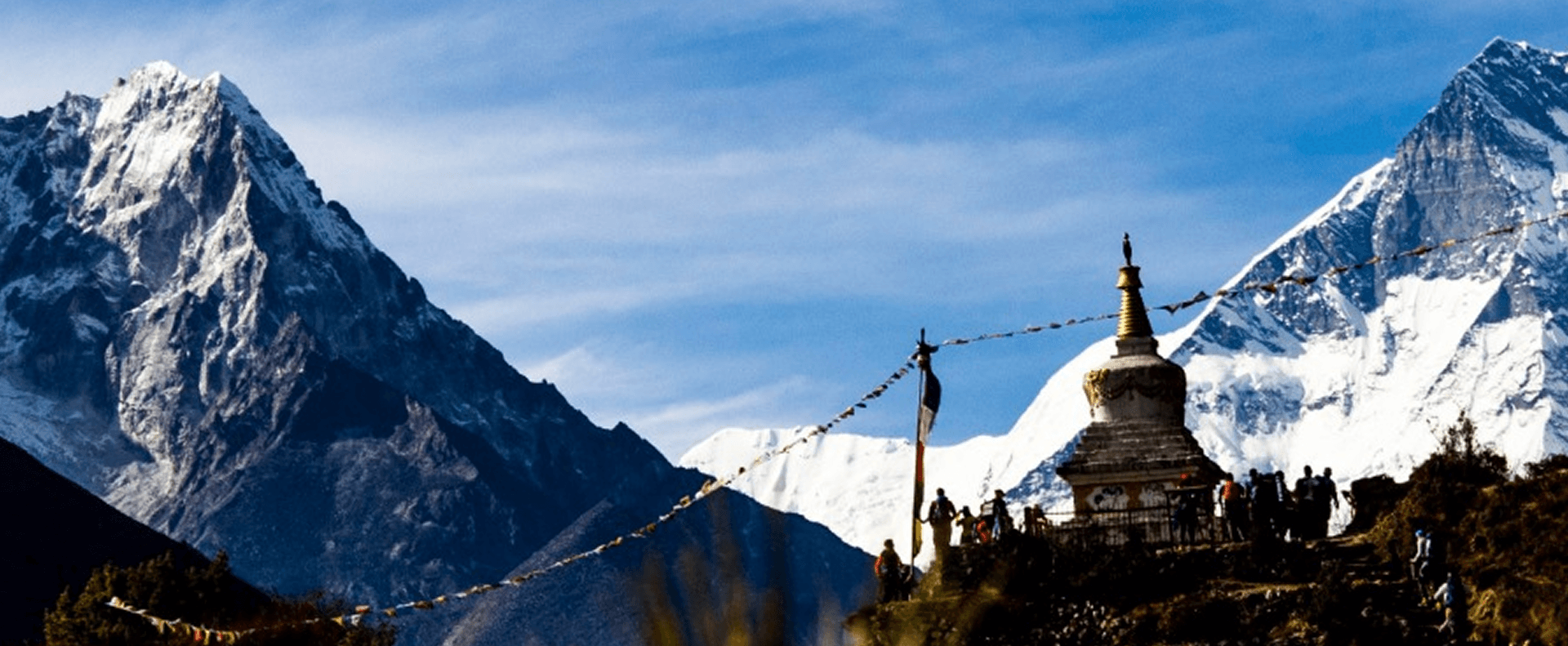
A major highlight of this adventure is the village of Phu (4,080 m), one of the last settlements before the Tibetan border. Enclosed by a stone wall and centred around the centuries-old Tashi Lhakhang Gompa, Phu offers a rare glimpse into a way of life that has changed little for generations, with chortens, mani walls, and prayer flags marking the valley's deep Tibetan Buddhist heritage.

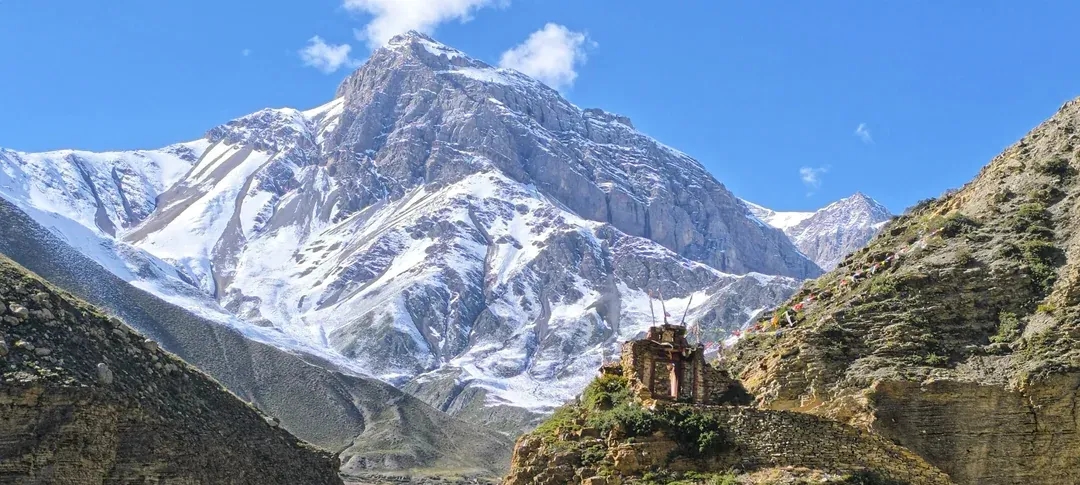
Continuing through the valley, the trek reaches Nar (4,110 m), a striking cluster of flat-roofed stone houses built directly into the hillside and surrounded by terraced barley fields, before the route climbs to its defining moment: the crossing of Kang La Pass (5,240 m). Standing among prayer flags at the top of the pass, trekkers are rewarded with a sweeping panorama across the Annapurna range, including Annapurna II, Gangapurna, and Tilicho Peak.

Beyond Kang La, the trail descends to rejoin the classic Annapurna Circuit at Ngawal, where the scenery opens back into the wider Manang valley before the journey concludes through Pisang and Besisahar.

Combining the seclusion of a restricted Himalayan valley, the challenge of Kang La Pass, and the cultural richness of Nar and Phu, the Nar Phu Valley Trek offers a complete off-the-beaten-path Himalayan experience. It is an ideal adventure for trekkers seeking authentic mountain culture, dramatic remote landscapes, and one of Nepal's least-travelled trekking journeys.

Program Itinerary

Upon your arrival at Tribhuvan International Airport in Kathmandu, you will be warmly welcomed by our team and transferred to your hotel. The vibrant capital city of Nepal serves as the gateway to the Annapurna region and the beginning point of your Himalayan adventure.

After settling into the hotel, you will have time to rest and recover from your journey. Depending on your arrival schedule, you may explore the lively streets of Thamel, experience the local atmosphere, or simply relax before the trek begins.

In the evening, our team will conduct a short briefing to provide important information about the upcoming Nar Phu valley trek, including the itinerary, preparations, and any final arrangements. This will also be an opportunity to meet your trekking guide and clarify any questions before heading into the mountains. Overnight stay at a hotel.

Before setting off on the trek, we spend a rest and preparation day in Kathmandu, giving time to settle in, recover from travel, and get ready for the journey ahead. The day is kept relaxed, with the main focus on making sure everything is in order before heading into the mountains.

A pre-trek briefing is held to go over the itinerary, route, and any last-minute questions, along with a final equipment check to make sure all necessary gear is packed and ready. This is also a good opportunity to pick up or rent any last-minute items, exchange currency, or make any final arrangements needed before departure.

The rest of the day is left free, whether that means relaxing at the hotel, wandering around Thamel, or simply resting up before an early start the next morning. Overnight stay at a hotel in Kathmandu.

Leaving Kathmandu early in the morning, we begin the drive west out of the valley, following the Prithvi Highway as it winds through the hills of Nuwakot and Dhading, tracing the Trishuli River for much of the way. The route passes a string of small riverside towns, terraced hillsides, and suspension bridges, with rafting put-ins visible on the water below.

At Mugling, the road turns north at the Trishuli–Marsyangdi confluence and follows the Marsyangdi upstream into Lamjung district. The valley begins to narrow here, with forested slopes rising steeply on either side and, on a clear day, the first glimpses of the mountains ahead.

After several hours on the road, we reach Besisahar (760 m), the district headquarters of Lamjung and the traditional starting point of the Annapurna Circuit. Overnight stay at a lodge in Besisahar.

Setting off from Besisahar in the early morning light, the jeep climbs steadily along the Marsyangdi River, the valley walls closing in as we pass through Bhulbhule, Ngadi, and Jagat, with waterfalls dropping straight into the gorge and the vegetation shifting from subtropical to temperate forest. Beyond Tal, the road narrows further, cutting through cliffside sections and pine forest as it climbs into Manang district.

Passing through Chame (2,710m), the district headquarters of Manang, the valley opens briefly beside the river, with Annapurna II and Lamjung Himal visible rising directly above the town. The road continues beyond Chame, crossing to the true left bank of the Marsyangdi and winding through pine and fir forest, with the smooth granite wall of Paungda Danda towering overhead.

After a long day on rough mountain roads, we reach Koto, a small settlement marking the entrance to the Nar Phu restricted area. This is where permits are checked at the police and ACAP checkpoint before the valley proper begins. Overnight stay at a teahouse in Koto.

Departing Koto, the trail leaves the main Annapurna Circuit route and turns north into a narrow gorge carved by the Naar Khola. The path threads through dense pine and fir forest before giving way to a series of exposed, cliff-hugging sections, with the river churning through the rocky defile far below. Wooden bridges and landslide-prone stretches make this one of the more dramatic passages of the trek.

As the gorge gradually widens, the forest thins into scrubby, arid slopes, and the first mani walls and chortens signal the approach to Tibetan-influenced territory. We reach Meta (3,560m), a small scattering of stone houses perched on a ridge above the valley, with early views opening up toward Kang Garu and Himlung Himal. Overnight stay at a teahouse in Meta.

Leaving Meta, the trail continues deep into the upper valley, dropping briefly to cross the river before climbing again along narrow, exposed paths cut into the cliffside. The landscape grows increasingly stark and Tibetan in character, with high desert terrain, wind-scoured ridgelines, and long stretches where little grows beyond hardy scrub.

The path passes Kyang, a former yak-herding settlement now largely abandoned, before continuing through a dramatic narrow canyon guarded by the ruins of old fortress walls built to defend the valley's approach. Crossing a final high bridge over the gorge, we climb the last stretch to Phu (4,080m), a remote, walled village at the head of the valley and one of the last settlements before the Tibetan border. Overnight stay at a teahouse in Phu.

A full day set aside to rest and let the body adjust to the altitude before continuing higher into the valley. There's no need to rush; the extra time also gives us a chance to properly explore Phu itself, a village unlike almost anywhere else on the Annapurna Circuit.

Wandering through the tightly packed stone houses and narrow alleyways, we visit Tashi Lhakhang Gompa, the village's centuries-old monastery, before climbing to the ruined fortress on the ridge above town for sweeping views back down the valley we've just walked up. For those interested in local life, it's often possible to arrange a visit with a village family, or simply sit with a cup of tea and watch the rhythm of daily life in one of Nepal's most isolated communities. Overnight stay at a teahouse in Phu.

Heading out from Phu, we retrace part of the previous day's route back down the gorge, passing again beneath the old fortress ruins and through the narrow, cliff-cut sections above the river. Rather than continuing all the way back to Meta, the trail branches south, climbing gradually away from the Naar Khola into a quieter side valley.

The terrain softens as we go, forest and pasture replacing the high desert scenery of Phu, with grazing yaks and the occasional herder's shelter dotting the hillsides. We reach Nar Phedi (3,490 m), a small cluster of lodges beside a stream at the foot of the climb to Nar village, and a peaceful spot to rest before tomorrow's ascent. Overnight stay at a teahouse in Nar Phedi.

A short but steep morning climb out of Nar Phedi, the trail switchbacking up the valley wall through juniper scrub and rocky terrain, gaining height quickly above the river below. Prayer flags strung along the ridge come into view well before the village itself, fluttering against the backdrop of the peaks surrounding Nar.

Cresting the final rise, we arrive at Nar (4,110 m), one of the most striking villages in the Annapurna region: a dense cluster of flat-roofed stone houses built directly into the hillside, surrounded by terraced barley fields and encircled by a low stone wall. With the rest of the day free, there's time to wander the village, visit the local gompa, and take in views of the Nar Phu skyline rising directly behind town. Overnight stay at a teahouse in Nar.

An early start from Nar, well before sunrise, gives us the best chance of calm weather for the trek's high point. The trail climbs steadily out of the village, gaining height quickly on loose, rocky switchbacks as the terrain turns increasingly barren and wind-scoured. Every step upward brings the surrounding peaks closer, with the route eventually flattening onto a broad, exposed shoulder just below the pass.

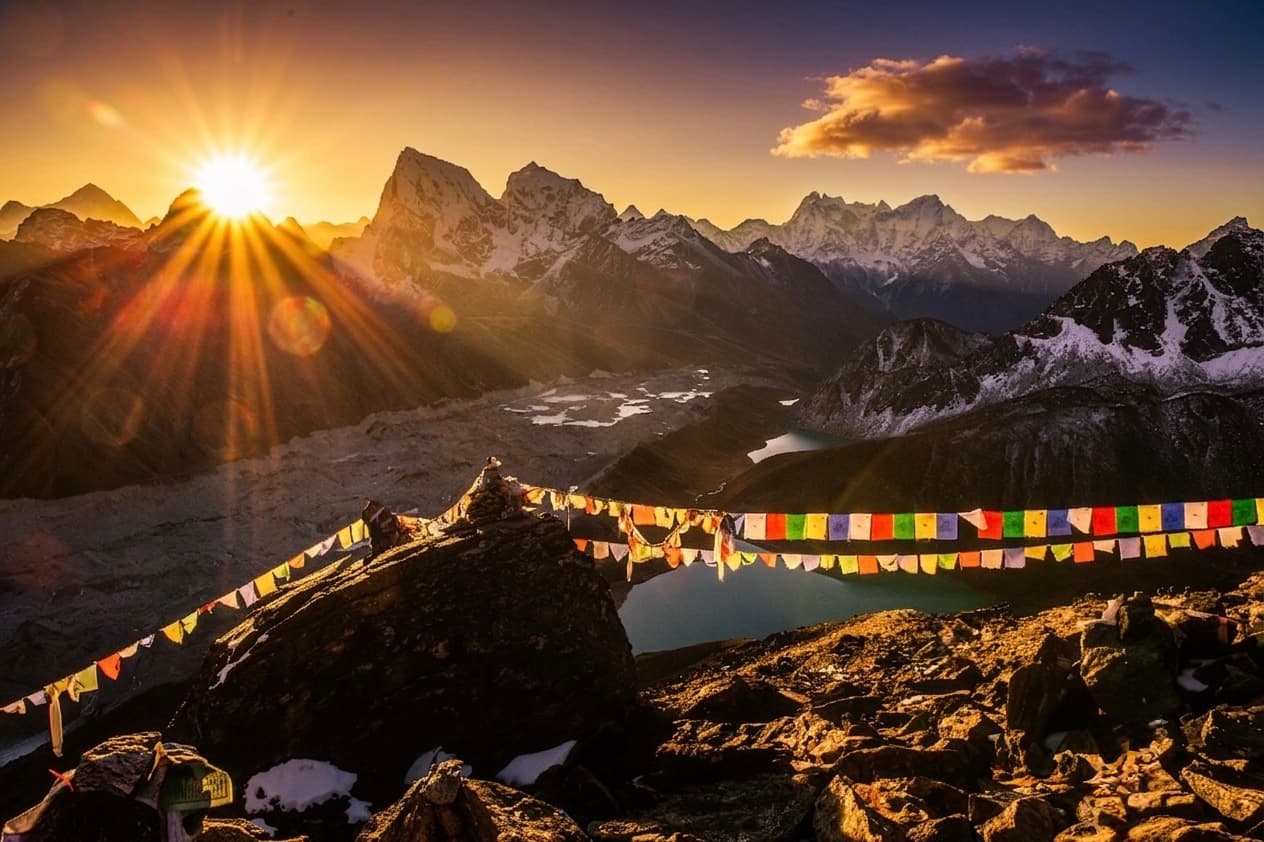
Reaching Kang La Pass (5,240 m), strung with prayer flags snapping in the wind, we're rewarded with a sweeping panorama across the Annapurna range: Annapurna II, Gangapurna, Tilicho Peak, and the wide sweep of the Manang valley laid out far below. After time to take in the views and catch our breath, the descent begins, long and knee-testing, dropping steadily down scree and rocky trail to rejoin the main Annapurna Circuit route.

We continue down to Ngawal (3,660 m), a traditional Gurung and Tibetan-influenced village perched above the valley floor. It's a full and demanding day, so an early start and steady pace throughout are essential. Overnight stay at a teahouse in Ngawal.

Departing Ngawal, the trail descends gently through juniper forest and open pastureland, with fine views back across the valley toward Annapurna II and the peaks we crossed the day before. The path soon rejoins the main Annapurna Circuit route, passing through quiet farming country as it drops toward the valley floor.

We reach Pisang (3,200 m), a village split between its old stone-built upper settlement and newer lower quarter along the road, where a waiting jeep takes over for the remainder of the journey. From here it's a long, winding drive back down the Marsyangdi valley, retracing much of the route from earlier in the trek, through Chame and the narrow gorge sections, before finally reaching Besisahar (760 m). Depending on road conditions and timing, an extra night here may occasionally be needed before continuing on to Kathmandu. Overnight stay at a lodge in Besisahar.

Setting out from Besisahar in the morning, the drive retraces the route back down the Marsyangdi valley, rejoining the Prithvi Highway at Mugling before turning east toward Kathmandu. The road winds through the hills of Tanahun and Dhading, following the Trishuli River for long stretches, with terraced farmland, riverside villages, and the occasional glimpse of rafters on the water below.

As the highway climbs out of the Trishuli valley and back over the rim of the Kathmandu valley, the scenery shifts from rural hillside to the increasingly dense outskirts of the capital. After a full day on the road, we arrive back in Kathmandu, bringing the trekking portion of the journey to a close. Overnight stay in Kathmandu.

A relaxed final day with no fixed schedule, giving time for any last errands, souvenir shopping in Thamel, or simply resting after the trek before heading home. Depending on flight timing, there may also be the chance to revisit a favourite temple or square from the first day in Kathmandu, or catch anything missed on arrival.

At the appropriate time, our representative transfers you to Tribhuvan International Airport for your onward flight, bringing the Nar Phu Valley trek to a close. It has been our pleasure hosting you through one of the Annapurna region's most remote and culturally rich corners, and we look forward to welcoming you back to Nepal.

Cost Includes

  • Airport Pick-up and drop Service
  • Hotel Accommodation in Kathmandu (twin sharing basis) with breakfast
  • Guided Tour of Kathmandu valley with an experienced tour guide
  • Sightseeing charges and Entry fees
  • Accommodation during the trek (teahouse / guesthouse / homestay)
  • All meals during the trek (Breakfast, Lunch, Dinner)
  • Transportation (tourist coach / local bus / private vehicle)
  • Experienced licensed English-speaking trekking guide
  • Local government Entry Permit of Rs. 2000 (started in 2018)
  • Insurance of the Guide and Porter
  • Annapurna Conservation Area Permit (ACAP)
  • Restricted Area Entry Permit
  • TIMS (Trekkers’ Information Management System) Trekking Permit Card
  • Medical kits carried by the guide
  • All necessary paper works, office service charge and all Government Taxes

Optional Add-ons

  • Airport transfer upgrade
  • Private porter support
  • Extra acclimatization day

Cost Excludes

  • Travel insurance (Mandatory: Should include emergency evacuation coverage while trekking up to 5500+ m)
  • International airfare and Visa costs (you can get Visa upon arrival at the airport)
  • Personal interest items or gears
  • Tips to guide / driver / porter
  • Extra night accommodation in Kathmandu in case of early arrival, late departure, and early return from the mountain (due to any reason) than the scheduled itinerary
  • Beverage and Drink Items / Other Extra facilities like hot shower during trek
  • Any other expenses which are not mentioned in “What’s Included” section

Travel Guide