License No: 237321/076/077

Mt. Himlung Expedition

Mt. Himlung Expedition

Your journey begins on the renowned Annapurna route, leading up to Koto. From Koto, you will traverse the newly opened trail to Nar-Phu Gaun, and continue towards Manang. This route is adorned with breathtaking views of towering peaks and passes, glaciers, gullies, springs, and charming remote villages.

Annapurna Region

Max Elevation

Max Elevation

7126m

Duration

Duration

30 days

Group Size

Group Size

10 Pax

Difficulty

Difficulty

Hard

Download Trip PDF
Enquire Now
Trek Starting Point

Trek Starting Point

Koto

Trek Ending Point

Trek Ending Point

Koto

Departure From

Departure From

Kathmandu

Transportation

Transportation

Tourist Coach, Private Vehicle, Local Jeep

Style

Style

Expedition / High-altitude mountaineering

Meal

Meal

Breakfast, Lunch, Dinner

Accommodation

Accommodation

Tea house / Tourist standard hotel in Kathmandu

Overview

Rising to 7,126 meters (23,379 ft) in Nepal's remote Nar Phu Valley near the Tibetan border, Himlung Himal has earned a reputation as one of the finest introductory 7,000-meter peaks in the Himalaya. While technically less demanding than many mountains of comparable altitude, it remains a serious high-altitude expedition where sound judgment, disciplined acclimatization, and strong physical conditioning are essential for success.

What sets Himlung apart is the balance it offers between accessibility and genuine expedition climbing. The approach trek passes through the culturally rich landscapes of the restricted Nar and Phu valleys, where centuries-old Tibetan Buddhist traditions remain deeply rooted. By the time climbers reach Base Camp, the transition from remote Himalayan villages to an alpine environment feels gradual and natural, providing an ideal foundation for acclimatization.

From Base Camp, the route typically follows a well-established line through a series of progressively higher camps. Most of the climbing involves snow slopes, glacial terrain, and moderate-angle ice, with fixed ropes installed on the steeper sections when conditions require. Although the technical difficulty is generally considered moderate, the mountain should never be underestimated. Weather can change rapidly, high winds are common, and the effects of altitude become increasingly significant above 6,500 meters.

Summit day is long, demanding, and rewarding. The climb begins well before dawn, ascending broad snowfields before reaching the upper ridge. As the first light reaches the surrounding giants, including Annapurna II, Manaslu, and the Tibetan Plateau, the scale of the Himalaya becomes truly apparent. The final ascent requires steady pacing, efficient movement, and careful energy management. Patience often proves more valuable than speed.

One of Himlung Himal's greatest strengths is its consistently high success rate when climbers follow a conservative acclimatization schedule. The mountain has become a preferred objective for experienced trekkers making the transition to expedition climbing, as well as for mountaineers preparing for larger objectives such as Cho Oyu, Manaslu, or Everest. Its relatively straightforward route allows climbers to focus on developing expedition skills, including living at altitude, managing long summit days, traveling on glaciers, and operating safely in a high-altitude environment.

Having spent time on Himlung, what stands out most is not simply the summit, but the overall experience. The solitude of the Nar Phu Valley, the professionalism required throughout the expedition, and the gradual progression into increasingly wild alpine terrain create an expedition that feels authentic from beginning to end. Success on Himlung is earned through patience, teamwork, and respect for the mountain rather than technical difficulty alone.

For climbers seeking a true Himalayan expedition without the extreme objective hazards associated with many higher peaks, Himlung Himal remains one of the most rewarding and well-balanced objectives in Nepal. It offers an exceptional combination of cultural immersion, remote wilderness, and high-altitude mountaineering, making it a mountain that continues to be respected by seasoned climbers and valued as an important milestone in any mountaineer's progression.


Historical Significance:

Mt. Himlung was first opened to climbers in 1992, with a successful ascent by a Japanese team in the same year. Since then, only a handful of teams have reached the summit, highlighting the exclusivity and allure of this expedition. Despite being technically easier than many other high peaks, ascending Mt. Himlung requires a high level of fitness and determination.


Why Choose Mt. Himlung with Trekadviser Pvt. Ltd?

Expert Guidance: Led by experienced mountaineers who ensure your safety and success on the climb.

Comprehensive Support: From base camp logistics to high-altitude acclimatization, we provide all necessary support to make your expedition seamless.

Cultural Encounters: Engage with the local culture and communities, enhancing your trekking experience with meaningful interactions.

Join Us:

Explore the untouched beauty of Mt. Himlung with Trekadviser Pvt. Ltd. Our expertly crafted expeditions promise not only the thrill of climbing but also the joy of discovering one of Nepal’s hidden treasures.

Program Itinerary

Upon arrival at Tribhuvan International Airport in Kathmandu (1,400m), you will be warmly welcomed by our expedition representative and transferred to your hotel. After check-in, you will have time to rest and recover from your international journey or explore the vibrant streets of Nepal's capital at your own pace.

After checking into the hotel, the remainder of the day is reserved for rest and recovery after your international journey. Depending on your arrival time, you may explore the lively streets of Thamel, visit nearby markets, or simply relax before the expedition begins.

In the evening, the expedition team will gather for an initial meeting with the climbing guides and staff. This provides an opportunity to introduce the team members, discuss the upcoming journey, and review important expedition procedures before heading toward the mountains.

You will spend the night at a comfortable hotel in Kathmandu, enjoying the final comforts of the city before entering the remote Himalayan environment.

Today is dedicated to cultural exploration and final preparations before the expedition begins. After breakfast, we explore some of Kathmandu Valley’s most significant cultural landmarks, offering an opportunity to experience Nepal’s unique blend of ancient traditions, spirituality, and architecture.

Later in the day, attention shifts toward expedition preparation. Our climbing team will conduct a detailed equipment check to ensure all personal and group gear is ready for the high-altitude environment. The expedition leader will provide a comprehensive briefing covering the climbing route, acclimatization strategy, safety procedures, communication systems, and expectations throughout the expedition.

A comprehensive expedition briefing will also be conducted, covering the route, acclimatization strategy, safety procedures, communication systems, and expectations throughout the climb. This preparation ensures every team member begins the expedition well-organized and confident.

After completing the necessary arrangements, we enjoy a final evening in Kathmandu before beginning our journey toward the remote Nar-Phu Valley.

You will spend the night at a hotel in Kathmandu.

After breakfast, we begin our scenic overland journey from Kathmandu to Besisahar, the gateway to the Annapurna and Nar-Phu regions. Leaving the Kathmandu Valley behind, the route follows winding highways through Nepal’s picturesque countryside, passing terraced hillsides, traditional villages, river valleys, and agricultural landscapes.

As we continue westward, the landscape gradually becomes more mountainous, with glimpses of Himalayan peaks appearing above the surrounding hills. The drive follows the Marshyangdi River valley, which will accompany us deeper into the mountain region over the coming days.

Upon arrival in Besisahar, there will be time to settle into the lodge, organize personal belongings, and prepare for the continuation of our journey toward the remote Nar-Phu Valley.

Today, we continue our journey deeper into the Himalayas with a scenic drive from Besisahar to Koto. The route follows the Marshyangdi River through increasingly rugged terrain, passing waterfalls, forested hillsides, traditional settlements, and dramatic mountain landscapes.

As the road climbs higher, the surroundings become quieter and more remote. The changing scenery provides a gradual transition from Nepal’s middle hills into the high Himalayan environment.

Koto is the entrance point to the restricted Nar-Phu Valley and marks the beginning of our trekking section. After arriving at the village, the team completes necessary permit checks before entering this remote region known for its untouched landscapes, Tibetan-influenced culture, and spectacular mountain scenery.

The evening is spent preparing trekking equipment and resting before the first walking day of the expedition. Overnight stay at a teahouse.

After breakfast, we leave Koto behind and begin trekking into the remote Nar-Phu Valley. The trail follows the Nar Khola through beautiful forests, narrow valleys, and impressive river gorges. Several suspension bridges and gradual uphill sections make this a rewarding introduction to the trekking phase.

The route remains peaceful and less crowded compared to Nepal’s classic trekking destinations, allowing us to fully appreciate the wilderness and natural beauty of the region. As we gain altitude, the landscape begins to change, with dense forests giving way to alpine terrain and increasingly impressive mountain views.

After a steady ascent, we reach Meta, a small mountain settlement located on a wide hillside overlooking the valley. Surrounded by dramatic peaks and open landscapes, Meta provides a perfect resting point as we continue deeper toward Phu Gaon and Himlung Base Camp. Overnight stay at a teahouse.

Today’s trek takes us farther into the isolated Nar-Phu Valley, where ancient Himalayan culture and dramatic landscapes combine to create a truly unique experience. The trail passes through barren mountain terrain, crossing streams and traversing rocky landscapes decorated with prayer flags, mani walls, and traditional Buddhist monuments.

As we approach Phu Gaon, the influence of Tibetan culture becomes increasingly visible. The village’s stone-built houses, narrow pathways, and ancient monasteries reflect a way of life that has remained largely unchanged for generations.

Phu Gaon is one of Nepal’s most remote settlements and offers an authentic glimpse into Himalayan life. After arriving, there will be time to explore the village, interact with local residents, and enjoy the magnificent views of surrounding peaks. Overnight stay at a teahouse.

A dedicated acclimatization day is scheduled in Phu Gaon to allow the team to adjust gradually to the increasing altitude before moving toward Himlung Base Camp. Proper acclimatization is essential for a safe and successful 7,000-meter expedition, and today provides valuable time for the body to adapt.

A short acclimatization hike will be organized, allowing us to gain additional elevation while returning to sleep at the same altitude. This approach helps improve the body’s ability to adjust to thinner air while maintaining energy for the upcoming stages.

The day also provides an opportunity to explore Phu Gaon more closely, visit local monasteries, and experience the unique traditions of this remote Himalayan community.

Leaving Phu Gaon after breakfast, we begin our final trekking day toward Himlung Base Camp. The trail gradually ascends through a remote alpine valley, where vegetation becomes increasingly sparse and the surrounding landscape transforms into a dramatic world of glaciers, rocky slopes, and towering Himalayan peaks.

The walk is intentionally paced to support acclimatization as we approach nearly 5,000 meters. Along the way, the first close views of Himlung Himal begin to appear, creating a sense of excitement as the expedition moves from trekking into climbing mode.

Upon reaching Base Camp, our support team will establish the expedition camp, including sleeping facilities, dining areas, communication systems, and essential equipment. The coming days will focus on acclimatization rotations, technical preparation, and building the foundation for a safe summit attempt.

After reaching Himlung Base Camp, the expedition enters the most important preparation phase of the climb. The coming days are dedicated to acclimatization rotations, technical training, route familiarization, and ensuring that every member of the team is fully prepared for the summit attempt.

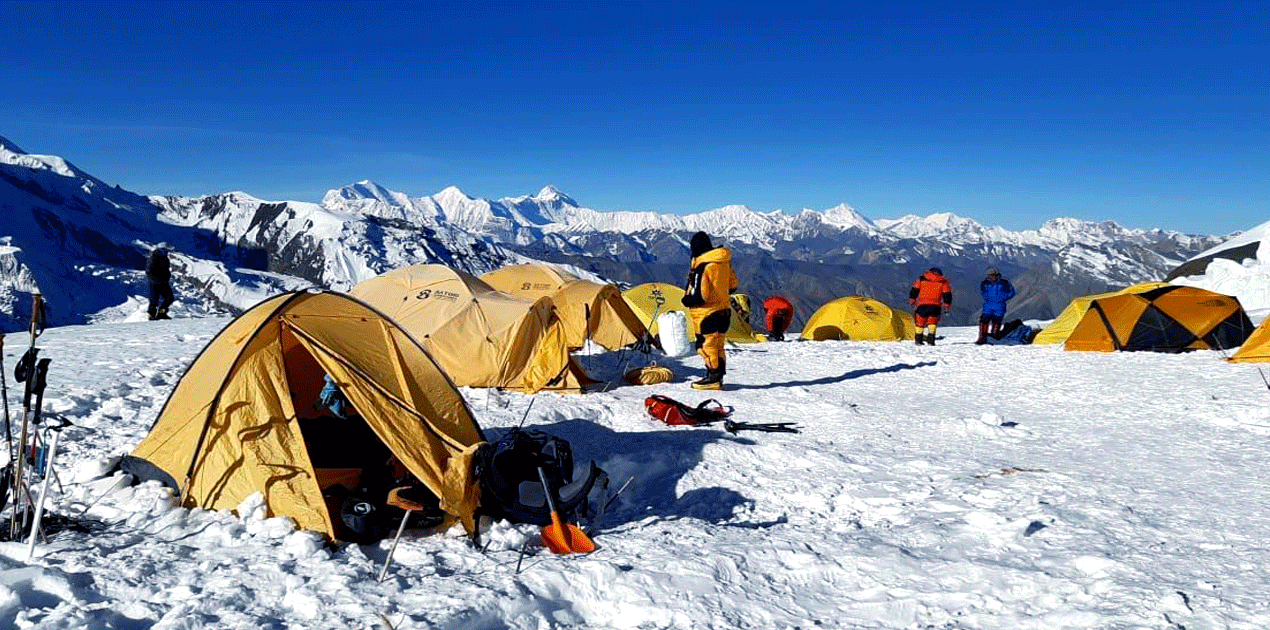
At 4,900 meters, Base Camp becomes our home for the duration of the climbing period. The daily routine is designed around maintaining strength, adapting to the altitude, and preparing the body for the challenges of climbing above 7,000 meters. Mornings typically begin with breakfast followed by equipment preparation, weather updates, and climbing briefings from the expedition leader. The team’s health, oxygen saturation levels, and overall condition are monitored regularly to ensure everyone is progressing safely.

The first rotation begins with an ascent toward Camp I, allowing climbers to gradually experience higher elevations while becoming familiar with the route. The climb involves glacier travel, uneven terrain, and sections requiring the use of technical equipment such as crampons, harnesses, and fixed ropes. The guides provide support throughout the climb, ensuring that all team members are comfortable with the techniques required for higher sections of the mountain.

After spending time at Camp I, the team returns to Base Camp for rest and recovery. This period is essential, as the body continues to adapt during recovery after exposure to higher altitudes. Adequate hydration, nutrition, and rest are emphasized to maintain energy levels for the next rotation.

The second acclimatization rotation takes the team higher toward Camp II, allowing climbers to spend more time at elevations closer to those encountered during the summit push. This stage provides valuable experience with the conditions above 6,000 meters, including colder temperatures, reduced oxygen levels, and more demanding terrain. Climbers practice efficient movement techniques, manage their equipment systems, and develop confidence on the mountain.

Throughout these rotations, the climbing team works closely with the guides and Sherpa support staff to establish a safe and efficient climbing rhythm. Fixed ropes are inspected, camps are prepared, and essential supplies are positioned strategically to support the summit attempt. The expedition team also closely monitors weather forecasts, snow conditions, and mountain stability to determine the safest possible timing for the final ascent.

Between rotations, rest days at Base Camp allow the body to recover while maintaining acclimatization gains. These days are also used for technical training, equipment checks, photography, communication with the support team, and preparing personal climbing gear.

The purpose of this acclimatization period is not only to gain altitude experience but also to build confidence and teamwork among the expedition members. By the conclusion of this phase, climbers should feel familiar with the route, comfortable using their equipment, and physically prepared for the challenge of reaching the summit of Himlung Himal.

The final summit schedule remains dependent on weather conditions, mountain conditions, and the overall health of the team. Once the expedition leader confirms a favorable weather window, the team begins preparations for the summit push.

Following successful acclimatization rotations and thorough preparation at Base Camp, the expedition enters the most anticipated phase: the summit push of Himlung Himal (7,126 m). After monitoring weather forecasts, assessing mountain conditions, and confirming that all team members are ready, the expedition leader selects the most suitable weather window for the final ascent.

The summit attempt is carefully planned to maximize safety and success. All personal climbing equipment is checked, supplies are organized, and the team receives a detailed briefing covering the climbing schedule, route conditions, communication procedures, and safety considerations for the days ahead.

The climb begins with the departure from Base Camp toward the higher camps. Moving steadily and maintaining a controlled pace is essential at these elevations, where reduced oxygen levels make even simple movements physically demanding. The team follows the established route, using fixed ropes where required and relying on the experience of the climbing guides and Sherpa team throughout the ascent.

From Base Camp, climbers progress toward Camp I, where they rest and prepare for the next stage of the climb. The environment becomes increasingly alpine, with colder temperatures, steeper terrain, and more challenging conditions. The focus remains on conserving energy, maintaining proper hydration, and following a steady climbing rhythm.

The following stage involves moving higher toward Camp II, situated at a significantly greater altitude. This section requires greater physical and mental effort as the effects of altitude become more noticeable. Climbers move carefully across snow and ice terrain while maintaining safety distances and following established climbing procedures. Time spent at Camp II allows the team to rest, prepare summit equipment, and mentally prepare for the final push toward the top of Himlung Himal.

The summit attempt usually begins during the early hours of the morning when snow conditions are generally more stable and temperatures are at their lowest. Departing from the high camp under headlamp light, climbers begin the final ascent toward the summit. The pace is slow and deliberate, allowing the body to adjust while conserving energy for the demanding climb ahead.

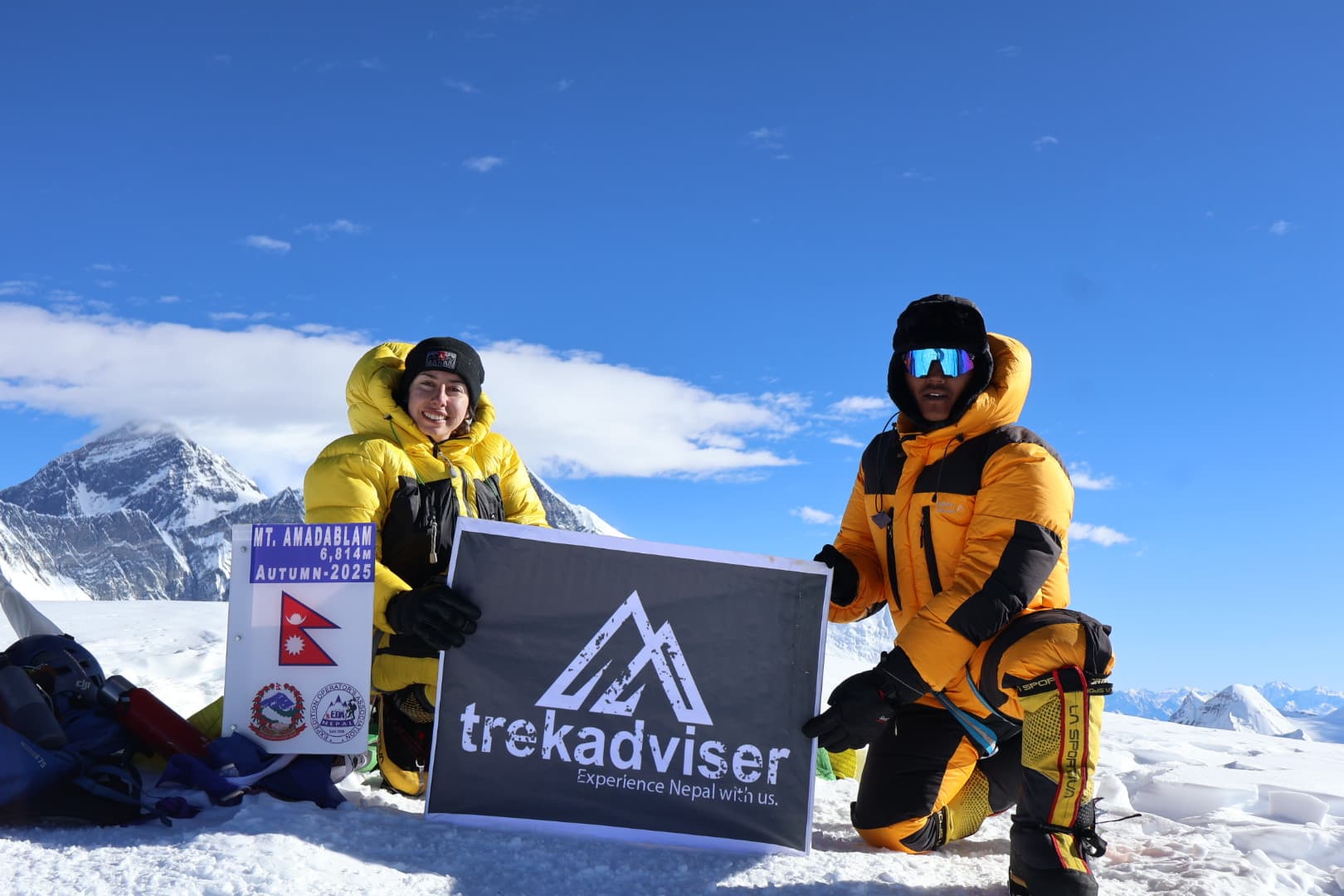
As the route climbs higher, the surrounding landscape opens into spectacular Himalayan views. The effort of the previous weeks, including trekking through the remote Nar-Phu Valley and completing multiple acclimatization rotations, comes together during this final stage. Reaching the summit of Himlung Himal at 7,126 meters represents an extraordinary achievement, offering breathtaking views across the remote Himalayan ranges of Nepal and Tibet.

Time on the summit is kept controlled due to the extreme altitude and changing mountain conditions. After celebrating the achievement and capturing photographs, the team begins the descent, which requires equal focus and caution. Descending safely is a critical part of any successful summit attempt, and climbers continue to follow established safety procedures while returning through the higher camps.

Once back at Base Camp, the team can finally relax and reflect on the accomplishment of climbing one of Nepal’s remarkable 7,000-meter peaks. The successful summit marks the culmination of weeks of preparation, teamwork, perseverance, and commitment.

The exact schedule during this period remains flexible and is adjusted according to weather conditions, route safety, and the physical condition of the climbing team. The expedition leader will make all final decisions regarding movement on the mountain to ensure the safest possible summit attempt.

After completing the summit attempt and spending time at Base Camp, we begin our descent back through the remote landscapes of the Nar-Phu Valley. Leaving behind the high-altitude environment of Himlung Base Camp, the trail gradually descends through glacial valleys and alpine terrain, offering a different perspective of the mountains that surrounded us during the climbing phase.

The return journey provides an opportunity to appreciate the dramatic landscapes at a more relaxed pace. The towering peaks, rugged cliffs, and wide Himalayan valleys that once represented the challenge of the climb now become a backdrop for reflection and celebration.

Upon reaching Phu Gaon, we return to the comfort of the village where we can rest, enjoy a warm meal, and reconnect with the unique culture of the Nar-Phu region. Overnight stay at a teahouse.

Today we continue our descent through the spectacular Nar-Phu Valley, retracing the route taken during our approach to Himlung Base Camp. The trail passes through traditional settlements, ancient Buddhist monuments, and dramatic mountain scenery that highlights the cultural and natural diversity of this remote region.

As we lose elevation, the landscape gradually changes, with alpine terrain giving way to greener hillsides and forested sections. The easier pace allows more time to appreciate the surroundings and reflect on the experiences of the expedition.

By afternoon, we arrive at Meta, where the team can enjoy a comfortable evening after completing the challenging high-altitude portion of the journey. Overnight stay at a teahouse.

Our final trekking day takes us from Meta back to Koto, descending through forests, river valleys, and narrow mountain gorges. The familiar landscapes provide a memorable conclusion to our trekking journey through the Nar-Phu Valley.

The trail gradually leads us back into lower elevations, where vegetation becomes thicker and the air feels noticeably warmer after weeks spent in the high mountains. Along the way, we cross suspension bridges and follow sections of trail surrounded by the peaceful sounds of Himalayan rivers and forests.

Upon arrival in Koto, the trekking portion of the Himlung Himal Expedition officially comes to an end. The evening provides a chance for the team to relax, celebrate the journey, and share memories from the expedition. Overnight stay at a teahouse.

After breakfast, we begin the return drive from Koto toward Kathmandu. Following the mountain roads back through the Marshyangdi Valley, we retrace the route through villages, rivers, and hillsides that marked the beginning of our Himalayan adventure.

The drive offers a final opportunity to enjoy Nepal’s changing landscapes, from remote mountain valleys to the more populated areas surrounding Kathmandu. Upon reaching Besisahar, we continue toward the capital, arriving in Kathmandu after completing our journey from the remote Nar-Phu region.

After checking into the hotel, enjoy a comfortable evening with time to rest, celebrate the expedition achievement, and enjoy the facilities of the city after weeks in the mountains.

A well-deserved leisure day is reserved in Kathmandu following the completion of the Himlung Himal Expedition. This day provides time to relax, recover, and enjoy the cultural atmosphere of Nepal’s capital city.

You may choose to explore Kathmandu’s historic streets, visit additional cultural sites, shop for traditional handicrafts, or simply enjoy a quiet day after the demanding weeks spent at high altitude. It is also an opportunity to organize photographs, share memories with fellow climbers, and celebrate the successful completion of the expedition.

In the evening, the team may gather for a farewell dinner, offering a chance to reflect on the challenges overcome and the unforgettable experiences shared throughout the journey.

Your Himlung Himal Expedition officially concludes today. According to your international flight schedule, our representative will transfer you to Tribhuvan International Airport for your onward journey.

As you depart Nepal, you carry with you memories of an incredible Himalayan adventure, from the remote villages of the Nar-Phu Valley and the challenges of high-altitude climbing to the achievement of standing on the summit of Himlung Himal at 7,126 meters.

We sincerely hope this expedition has been an inspiring and rewarding experience and look forward to welcoming you back to Nepal for future Himalayan adventures.

Cost Includes

  • Airport Pick-up and drop Service
  • Hotel Accommodation in Kathmandu (twin sharing basis) with breakfast
  • Private transfer between Kathmandu, Besisahar, and Koto (round trip)
  • Guided tour of Kathmandu valley with an experienced tour guide
  • Sightseeing charges and Entry fees
  • Accommodation during the trek (teahouse / guesthouse / camp)
  • All meals during the trek (Breakfast, Lunch, Dinner)
  • 1: 1 experienced private climbing Sherpa guide during trek and climb (Himlung Approached)
  • Local government Entry Permit of Rs. 2000 (started in 2018)
  • Insurance of the Sherpa guide and Porter
  • Climbing Permit for Mt. Himlung Himal issued by the Department of Tourism
  • Expedition royalty to climb Mt. Himlung Himal levied to the Nepal Government
  • Nar-Phu Valley Restricted Area Permit (RAP)
  • Annapurna Conservation Area Project Permit
  • TIMS (Trekkers’ Information Management System) Trekking Permit Card
  • Medical kits carried by the guide
  • All necessary paper works, office service charge and all Government Taxes

Optional Add-ons

  • Airport transfer upgrade
  • Private porter support
  • Extra acclimatization day

Cost Excludes

  • Travel insurance (Mandatory: Should include emergency evacuation coverage while trekking up to 5500+ m)
  • Summit bonus to your private Sherpa Guide for the summit push (a minimum of US$ 1,500.00)
  • Tips to Base Camp Staffs is Mandatory; a miminum of US$ 300 per member for the kitchen team
  • International airfare and Visa costs (you can get Visa upon arrival at the airport)
  • Expedition Gear
  • Personal interest items or gears
  • Tips to guide / driver / porter
  • Extra hotel nights in Kathmandu
  • Additional accommodation expenses resulting from early arrival, delayed departure, early return, flight cancellation, weather disruption, or other unforeseen circumstances.
  • Beverage and Drink Items / Other Extra facilities like hot shower during trek
  • Any other expenses which are not mentioned in “What’s Included” section

Travel Guide