
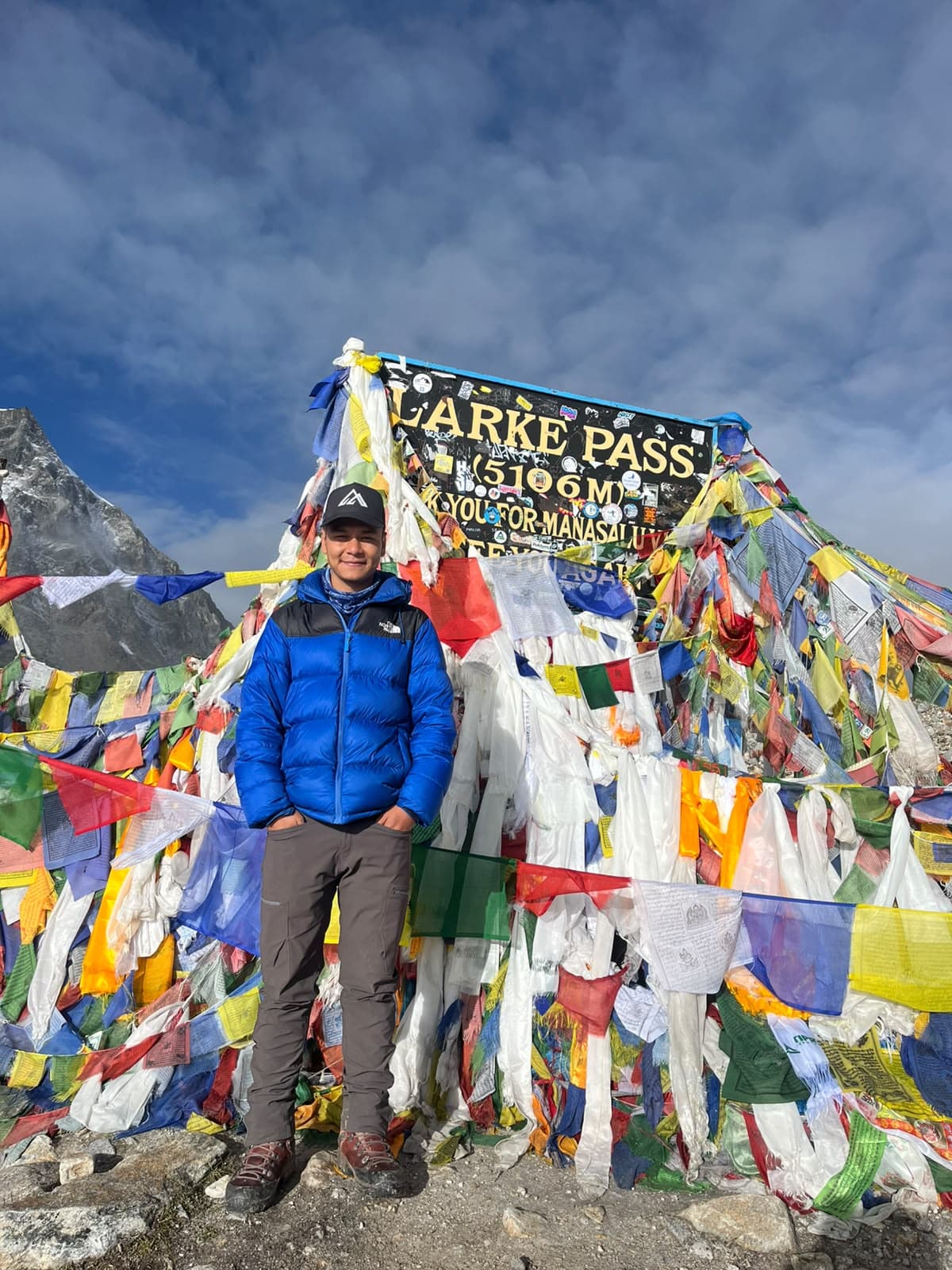
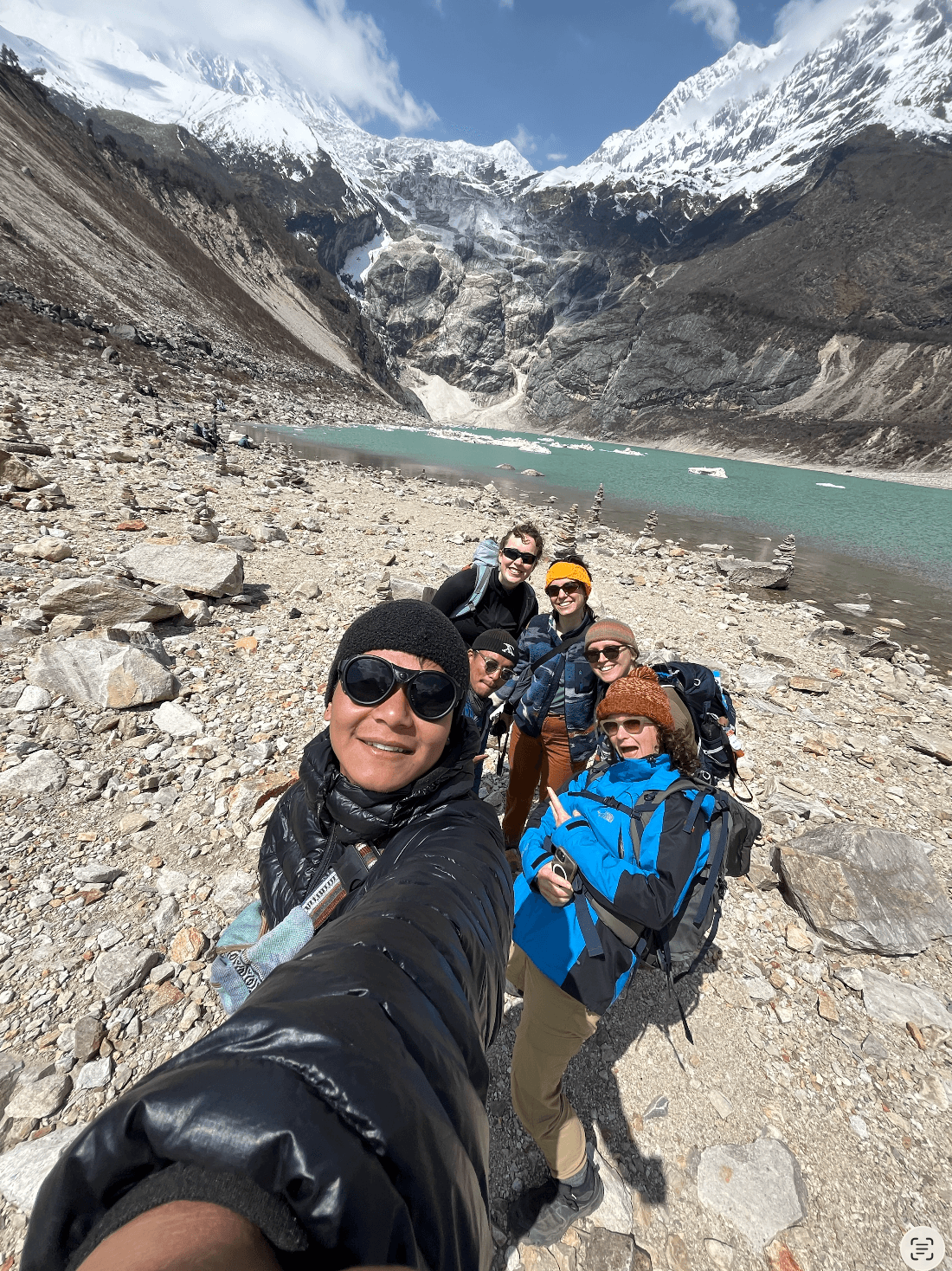
Trekadviser guide Samraj and his clients recently completed the Manaslu Circuit despite severe flooding that disrupted sections of the trail. With the support of local residents, a temporary wooden bridge was built, allowing the group to safely continue their journey. The experience highlighted the resilience of Manaslu’s communities and the importance of patience, local knowledge and responsible decision-making in the Himalayas
After the Flood: How a Temporary Bridge Helped Trekadviser Clients Complete the Manaslu Circuit
By Trekadviser | Manaslu, Nepal
MANASLU, Nepal — Heavy flooding disrupted sections of the Manaslu Circuit this September, forcing some trekkers to turn back. But after waiting for conditions to improve and with help from local residents who built a temporary wooden bridge, Trekadviser guide Samraj and his clients were able to continue and complete their trek.
Trekadviser guide Samraj and his clients encountered difficult conditions along the Manaslu trail, where flooding and damaged crossings had disrupted trekking for visitors and affected local communities.
Some trekkers in the region were forced to turn back as conditions became increasingly difficult.
For Samraj and his group, however, the journey continued cautiously, with the guide remaining with his clients while waiting for a safer way forward.
The breakthrough came with the help of local residents, who worked to construct a temporary wooden bridge across an affected section of the trail.
Using large pieces of timber and locally available materials, the community restored a temporary crossing, allowing trekkers to carefully continue their journey.
A trek shaped by changing conditions
The Manaslu Circuit is known for its remote terrain, high mountain passes and dramatic landscapes. But in the Himalayas, conditions can change rapidly, particularly during the monsoon and post-monsoon period.
Flooding can damage trails and bridges within hours, leaving trekkers and local communities temporarily isolated.
For trekking guides, this means an itinerary cannot always be treated as a fixed schedule.
According to Trekadviser, Samraj remained in contact with local people and monitored the situation before deciding when and how the group could proceed.
The priority was not simply reaching the next destination, but ensuring that the group could move forward responsibly.
Local community steps in
The temporary bridge became an important part of the group's journey.
Rather than being a piece of trekking infrastructure provided by a large organization, it was the result of local people coming together to restore a basic connection along the trail.
For trekkers, the crossing offered a route forward. For the community, it represented an immediate response to infrastructure damaged by flooding.
Samraj and his clients crossed carefully after the temporary structure became usable.
Trekadviser said that permanent repairs would still be necessary and that trekkers should remain cautious around affected areas.
Not every trekker could continue
The flooding did not affect only one group.
Several trekkers in the region were forced to return because of difficult trail conditions and damaged infrastructure.
The experience highlighted the unpredictable nature of trekking in remote Himalayan regions, where weather events can quickly change travel plans.
For Samraj's group, waiting proved to be an important part of the journey.
Instead of rushing through an uncertain section, the group waited for local conditions to improve and for a temporary crossing to become available.
Completing the Manaslu Circuit
After navigating the affected section, Samraj and his clients continued their journey through the Manaslu region and ultimately completed their trek.
For the clients, the experience offered something beyond the usual Himalayan scenery.
They saw firsthand how dependent trekking in remote Nepal is on local communities and how quickly natural events can affect trails, bridges and daily life.
For Trekadviser, the journey also reinforced its approach to mountain travel: safety and responsible decision-making must come before a fixed itinerary.
The resilience behind the trail
The story of this trek is ultimately not only about a damaged bridge or a difficult crossing.
It is about the people living along the Manaslu trail.
When flooding disrupted movement, local residents responded by working together to create a temporary solution. Their efforts helped restore access at a critical point for both residents and trekkers.
For visitors to Nepal's mountains, moments like these can become some of the most memorable parts of a journey.
The mountains provide the landscape, but the people who live there often make the journey possible.
A reminder for future trekkers
The Manaslu Circuit remains one of Nepal's most spectacular trekking routes, but recent events are a reminder that conditions should always be checked before departure.
Trekkers should travel with experienced, properly equipped guides, follow local authority and trail advisories, and be prepared for itinerary changes when weather or infrastructure creates risks.
The successful completion of Samraj's group was made possible through patience, careful assessment and cooperation with local people.
From flood-damaged trails to a temporary bridge and finally the completion of the circuit, this Manaslu journey became a story of resilience — both of the trekkers and of the communities that call the Himalayas home.
Field report: Trekadviser team, Manaslu, Nepal.